



You think stress is something you just push through.
But what if I told you that chronic stress isn’t just draining your energy — it’s actually burning through specific nutrients your brain and body depend on to function? And every time you skip a proper meal or reach for something quick and sugary, you’re accelerating exactly the thing that’s exhausting you.
If you’ve been stressed for weeks or months and nothing seems to help, it might not be your mindset or your workload. It might be what’s on your plate.
Why So Many People Feel Worse the Longer Stress Lasts
Chronic stress is one of the most underestimated health problems most people deal with quietly. According to research published by the American Psychological Association, over 75% of adults report physical or emotional symptoms of stress in the past month — and most of them have no idea nutrition is part of the solution.
The problem isn’t just that stress feels bad. It’s that prolonged stress changes how your body absorbs and uses nutrients. You start running on fumes. And the cycle gets harder to break.
Sound familiar? Here’s what chronic stress actually looks and feels like:
- Constant low-level anxiety you can’t switch off
- Craving sugar, caffeine, or junk food — and still feeling empty afterward
- Poor sleep even when you’re completely exhausted
- Tension headaches, tight jaw, or neck pain with no clear cause
- Difficulty focusing for more than a few minutes at a time
If 3 or more of those apply to you right now, this is fixable. And it starts with understanding what stress is doing inside your body.

What’s Actually Happening Inside Your Body
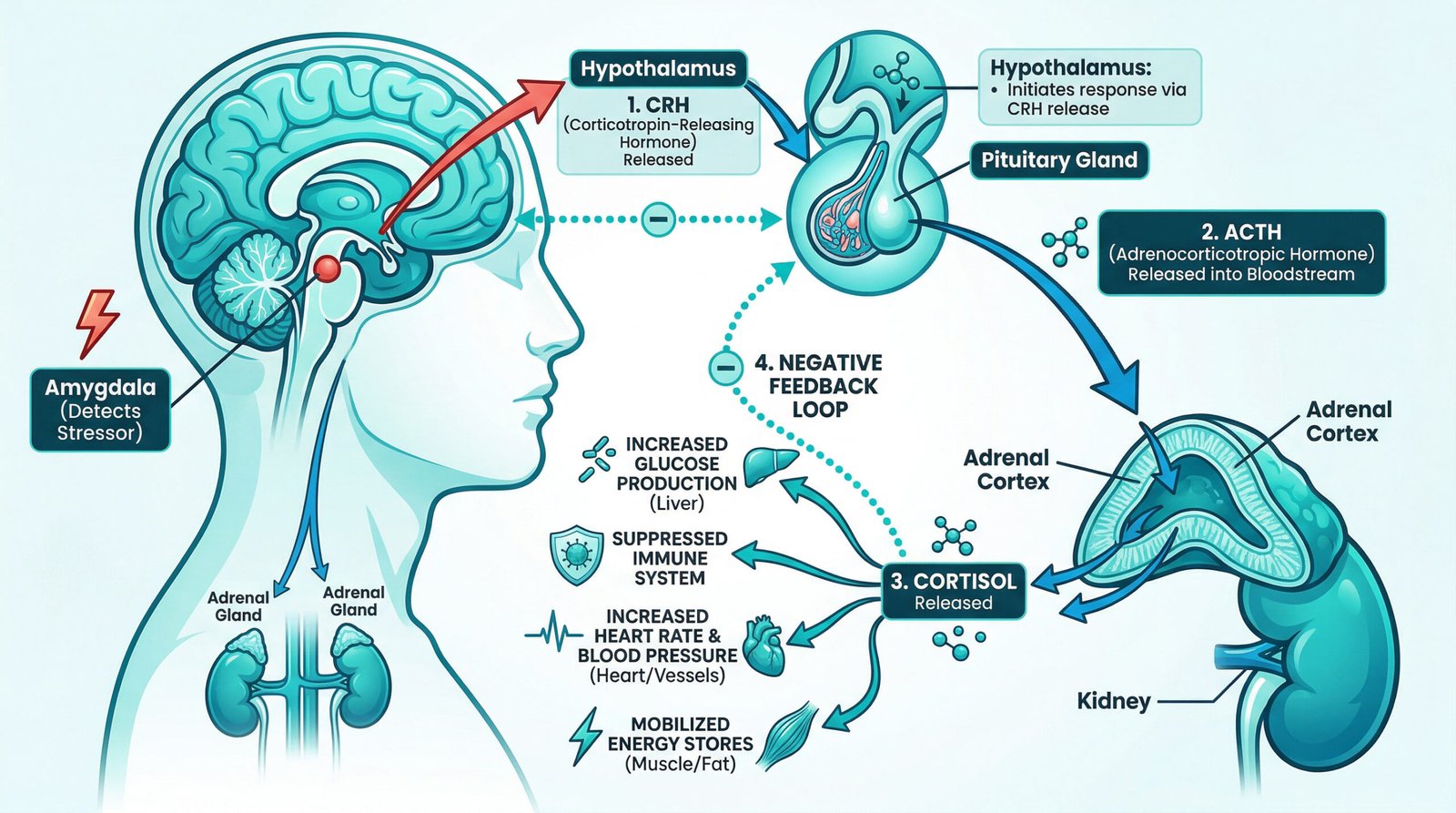
When you’re chronically stressed, your body runs a low-level emergency response every day. That response consumes specific nutrients — and if you’re not replacing them through food, you feel worse and worse over time.
Cortisol depletes your magnesium reserves
Every time your stress response fires, your body releases cortisol — your primary stress hormone. Cortisol production requires magnesium, and high cortisol levels cause your kidneys to excrete even more of it. The result: most chronically stressed people are significantly low in magnesium, which makes the nervous system hyperreactive — more anxious, more wired, less able to sleep. A study in the journal Nutrients (2020) confirmed the bidirectional link: low magnesium increases stress sensitivity, and stress depletes magnesium faster.
This is one reason stress feels like it compounds. The longer it lasts, the harder your body works to manage it — and the less equipped it becomes.
Your gut-brain axis gets disrupted
About 90% of your serotonin — the chemical most people associate with mood and calm — is produced in your gut, not your brain. Chronic stress damages the gut microbiome: it reduces the diversity of beneficial bacteria, increases intestinal permeability, and disrupts the communication pathway between your digestive system and your nervous system. This is called the gut-brain axis, and when it’s off, your mood, focus, and emotional resilience take a serious hit.
What you eat directly shapes your gut bacteria. That’s why food isn’t just fuel — it’s a direct input into your mental state.
B vitamins get burned through faster than you can replace them
Your body uses B vitamins (particularly B6, B9, and B12) to produce neurotransmitters like serotonin and dopamine, and to regulate your nervous system. Stress burns through these faster than your baseline requirements — and if you’re eating processed food or skipping meals under pressure, you’re not replacing them. The result is mood instability, brain fog, low motivation, and poor stress tolerance. According to Healthline’s review of the evidence, B vitamin supplementation has shown measurable reductions in occupational stress — but getting them through food first is the better long-term approach.
The Fix: 5 Foods That Actually Help When You’re Chronically Stressed
These aren’t magic foods. They’re specific nutrients your body is likely low on — and the best natural sources to get them back. I’m not 100% sure why some people feel the shift faster than others, but most notice a real difference within 7 to 10 days of eating this way consistently.
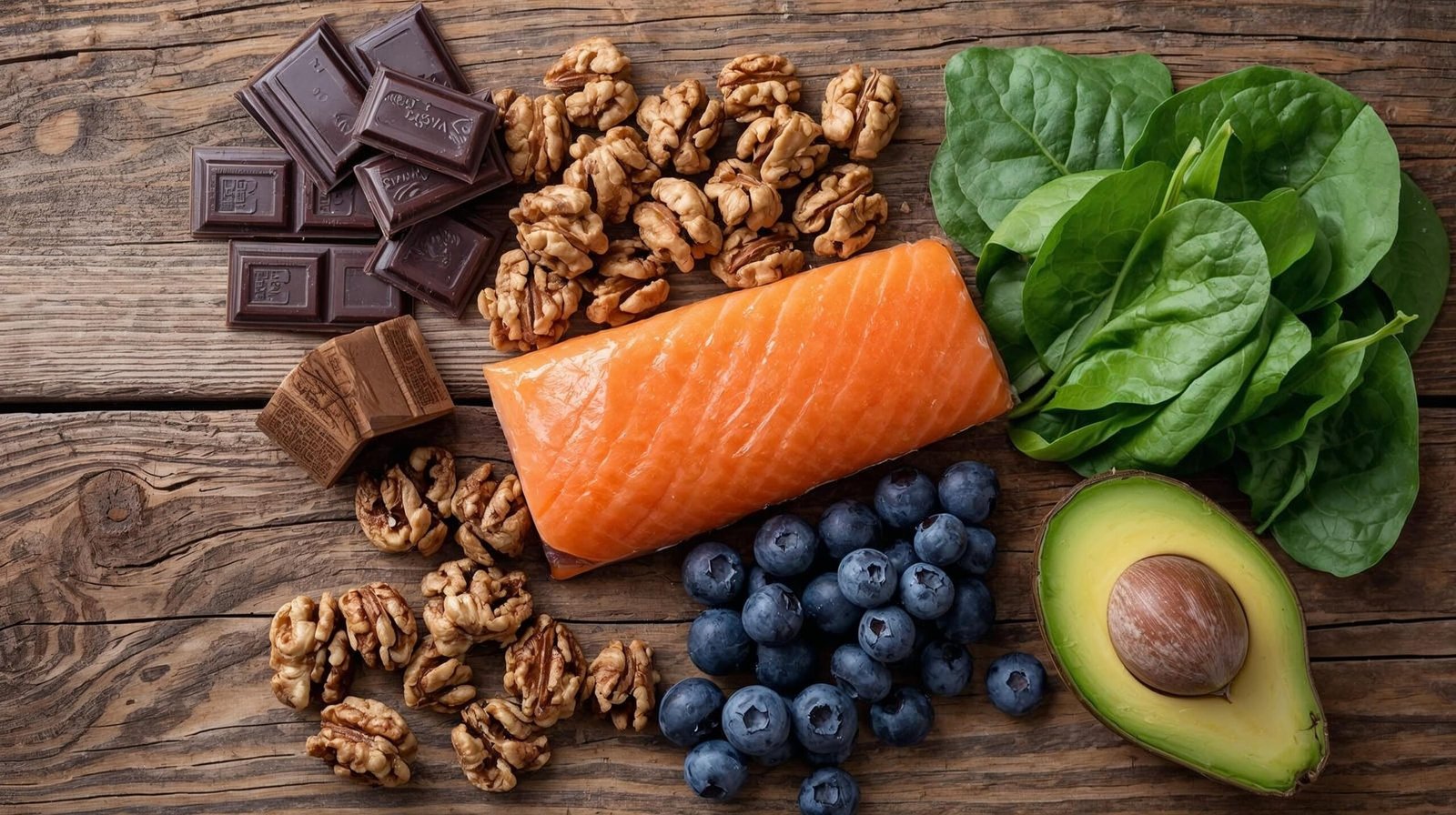
1. Dark leafy greens — spinach, kale, swiss chard
These are the best food sources of magnesium on the planet. A single cup of cooked spinach gives you roughly 37% of your daily magnesium needs. Eat them daily — in an omelette, a salad, or blended into something else. The goal is consistency, not perfection.
Common mistake: only eating salad greens (like iceberg or romaine). They contain almost no magnesium. Go for the dark, slightly bitter ones.
2. Fatty fish — salmon, sardines, mackerel
Omega-3 fatty acids directly reduce cortisol levels and lower systemic inflammation — two of the main drivers of chronic stress symptoms. A 2021 study in Molecular Psychiatry found that omega-3 supplementation significantly reduced markers of psychological stress. Salmon twice a week is enough. Sardines from a tin count. Don’t overcomplicate it.
Common mistake: taking fish oil capsules and skipping real fish. The whole-food version comes with selenium, B12, and other co-factors that make it more effective.
3. Walnuts and pumpkin seeds
Walnuts are uniquely rich in both omega-3s and magnesium. Pumpkin seeds are one of the highest zinc-containing foods available — and zinc is critical for regulating the HPA axis (your body’s stress response system). A small handful of each per day costs you nothing in effort.
Common mistake: buying roasted and salted versions. Heavy salt and high heat degrade some of the beneficial fats. Raw or lightly toasted works better.
4. Eggs
Eggs contain choline, which your brain needs to produce acetylcholine — a neurotransmitter involved in memory, calm focus, and nervous system regulation. They also provide B12, B6, and complete protein to stabilize blood sugar throughout the day. Honestly, this one surprised me when I looked into how much the research supports it for brain function under stress.
Common mistake: skipping the yolk. Almost all the relevant nutrients are in the yolk, not the white.
5. Dark chocolate (70% cacao or higher)
Dark chocolate contains magnesium, polyphenols that reduce inflammation, and compounds that trigger a small release of endorphins and serotonin. It also lowers cortisol levels after acute stress events. 20 to 30g per day — about two squares — is enough. Any more and the sugar starts working against you.
Common mistake: eating milk chocolate and calling it dark. Milk chocolate has too much sugar and too little cacao to provide any of these benefits.
Abdellah’s Experience: What Changed for Me
I didn’t connect food to stress for a long time. During the most difficult stretches at the warehouse — long shifts, short breaks, constant noise — I was surviving on bread, instant noodles, and three coffees a day. I thought I was just tired from work.
Then I started adding spinach and eggs in the morning, eating a handful of walnuts on my break, and switching one coffee for water with a few squares of dark chocolate at night. That’s all I changed.
After 10 days, I noticed I wasn’t reacting as hard to things that normally set me off. My jaw wasn’t as tight. I was sleeping through the night for the first time in months.
The stress didn’t disappear. I just stopped feeding it.

Try This for 7 Days (Then Tell Me I’m Wrong)
Don’t overhaul your diet. Just add these 5 things, consistently, for one week:
- Add one cup of dark leafy greens daily — in any meal, any form
- Eat fatty fish at least twice this week — tinned sardines count
- Keep a small bag of walnuts and pumpkin seeds on you for breaks
- Have 2 eggs for breakfast at least 4 mornings out of 7
- End the day with 20–30g of dark chocolate (70%+) instead of something sweet
Track how you feel on Day 1 versus Day 7. Not just energy — notice your jaw tension, sleep quality, and how fast you recover emotionally after a stressful moment.

The Real Reason Your Stress Never Fully Goes Away
Most people try to manage stress from the outside — fewer tasks, more rest, meditation apps. And those things help. But if your body is running on a nutrient deficit, no amount of mindset work will override the chemistry.
Stress eats specific things. You have to put them back.
If you want to go deeper on the sleep side of this, read: how to sleep better when you’re chronically stressed — it builds directly on what we covered here.
And if you’re curious about the morning habits that protect your energy before the day even starts, read: morning habits for energy and focus.
Table of Contents
Medical disclaimer
This content is for informational purposes only and does not constitute medical advice. Always consult a qualified healthcare professional for personal health concerns.