



You track your protein. You watch your calories. You cut back on sugar. But there’s one number almost nobody checks — and it quietly controls your blood sugar stability, your gut bacteria balance, your cholesterol, your inflammation levels, and how full you feel after every meal.
That number is your daily fiber intake. And the odds are almost certain you’re getting roughly half of what your body needs.
According to StatPearls (NCBI), mean fiber consumption by American adults between 2017 and 2020 was just 17 grams per day — against a recommended intake of 25–38 grams. A separate analysis found that approximately 95% of Americans don’t meet the minimum fiber target. Not 20%. Not 40%. Ninety-five percent.
This isn’t a minor gap. Fiber isn’t just roughage that keeps you regular. It’s the primary fuel source for the bacteria that produce the compounds your body uses to regulate blood sugar, control inflammation, and maintain metabolic flexibility. When fiber is missing, all of that starts to break down — slowly, quietly, and years before most people connect it to how they feel.
Why So Many People Are Running on a Fiber Deficit
The drop in fiber intake isn’t accidental. It tracks almost perfectly with the rise of ultra-processed food, which strips out fiber during manufacturing and replaces it with refined starch, sugar, and synthetic additives. The result: a diet that looks like food but behaves nothing like it inside the gut.
A 2025 analysis published in Frontiers in Nutrition using NHANES data from 1999 to 2018 confirmed that low fiber intake is independently associated with all-cause and cardiovascular mortality in adults with metabolic syndrome. The mechanism isn’t mysterious — fiber deficiency disrupts the gut microbiome, raises inflammatory markers, impairs blood sugar regulation, and accelerates insulin resistance. All of the metabolic conditions covered on this blog trace back, in part, to this single missing nutrient.
Does any of this sound familiar?
- You feel hungry again within 2 hours of a large meal
- Your energy drops noticeably after eating refined carbs or processed food
- You experience bloating or digestive irregularity without understanding why
- Your blood sugar or cholesterol results have crept in the wrong direction
- You rarely eat legumes, oats, or more than 2–3 servings of vegetables per day
Three or more of those is a reliable signal that fiber is a missing variable in your metabolic health. And it’s one of the easiest variables to change.

What’s Actually Happening Inside Your Body
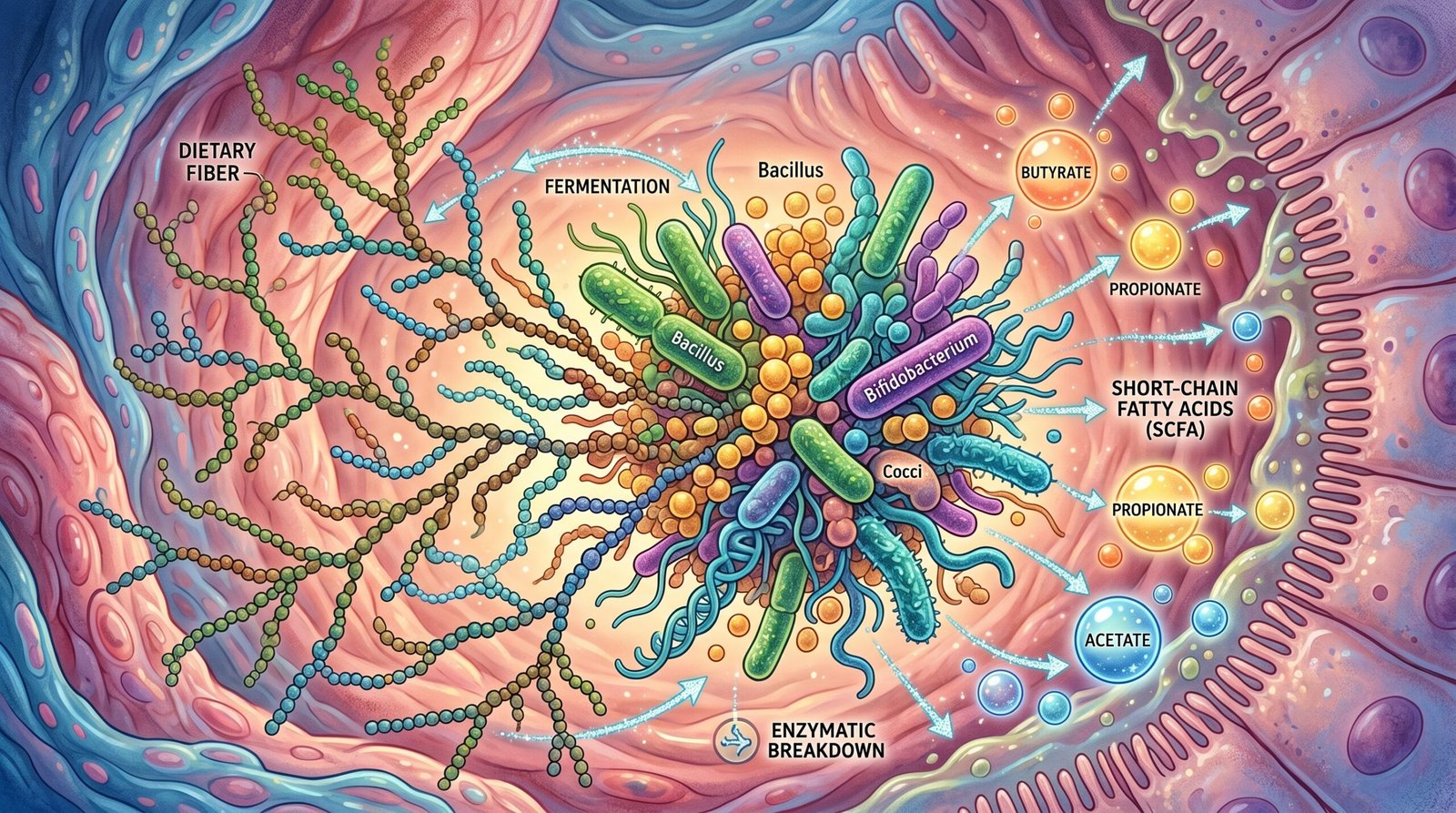
Fiber isn’t absorbed by your digestive system the way protein, fat, or refined carbohydrates are. It passes through your small intestine largely intact and arrives in your colon, where it becomes food for trillions of bacteria that live there. What those bacteria do with it is where the real metabolic story begins.
Fermentation and short-chain fatty acids: fiber’s most important job
When gut bacteria ferment dietary fiber, they produce compounds called short-chain fatty acids — primarily butyrate, propionate, and acetate. These aren’t waste products. They’re signaling molecules that regulate some of the most important metabolic processes in your body.
A systematic review and meta-analysis published in Nutrition Reviews (Oxford Academic) confirmed that short-chain fatty acid interventions significantly reduce fasting insulin levels — meaning the fiber-fermentation pathway directly improves insulin sensitivity. Butyrate in particular feeds the cells lining the colon wall, reducing gut permeability and systemic inflammation. Propionate signals the liver to reduce glucose production. Acetate reaches the brain and influences appetite regulation.
All three happen downstream of one thing: getting enough fermentable fiber into your colon every day.
Blood sugar control: why fiber slows the spike
Soluble fiber — found in oats, legumes, apples, and flaxseed — forms a gel-like substance in the digestive tract that physically slows the absorption of glucose into the bloodstream. This blunts the post-meal blood sugar spike that drives the insulin surge, the subsequent crash, and the cravings that follow.
This is why eating an apple produces a completely different blood sugar response than drinking apple juice, even if the total sugar content is similar. The fiber in the whole apple changes how fast that sugar enters your system. Remove the fiber and you remove the buffering mechanism.
For anyone dealing with insulin resistance, afternoon energy crashes, or the craving loop described in the ultra-processed food article — this mechanism is exactly why fiber is one of the most direct dietary tools available.
Gut microbiome diversity: the long-term metabolic asset
Your gut microbiome is not a fixed feature of your biology. It changes in response to what you eat — within days. A diet consistently low in fiber reduces the diversity and abundance of beneficial bacteria like Akkermansia muciniphila and Faecalibacterium prausnitzii — both associated with healthy metabolic function and reduced inflammation.
Conversely, consistently increasing fiber intake rebuilds that microbial diversity. Research shows the microbiome begins responding to dietary changes within 24–48 hours. You don’t need weeks or months to start shifting your gut profile in a healthier direction — you need a few consistent days of higher-fiber eating, sustained over time.
The Fix: 5 Habits That Close the Fiber Gap
The goal isn’t a dramatic dietary overhaul. It’s closing a gap — moving from the average 17 grams per day to somewhere closer to 25–30 grams — using foods you can find in any supermarket and habits you can sustain without calorie counting or complicated meal planning.
1. Build every meal around a fiber anchor
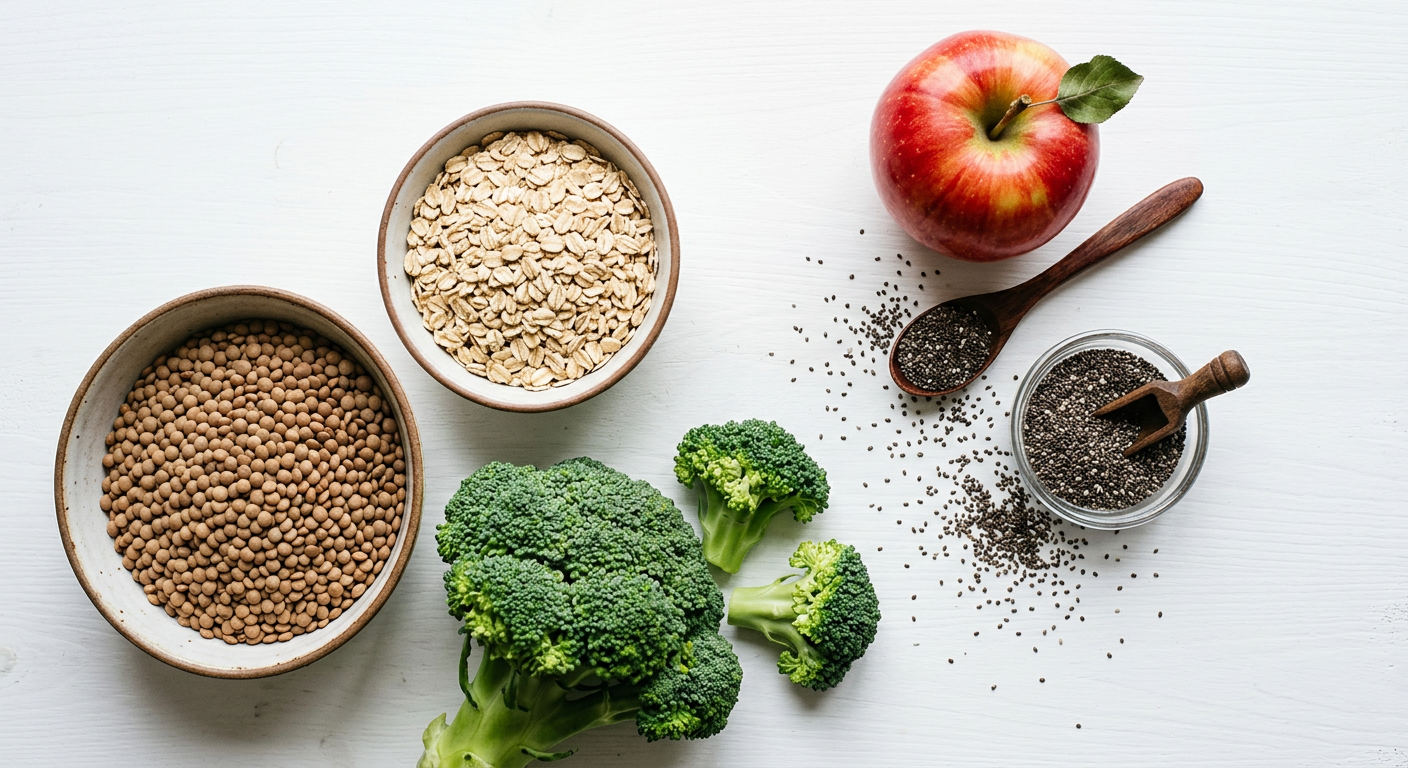
Before deciding what protein or fat to add, pick your fiber source first. That mental shift changes the composition of your plate automatically. Legumes — lentils, black beans, chickpeas — are the most efficient fiber sources available: one cup of cooked lentils delivers around 15–16 grams in a single serving.
Other reliable anchors: oats (4g per serving), roasted vegetables (3–5g per cup), whole grain bread (2–3g per slice), an apple with skin (4–5g), and chia seeds (10g per two tablespoons). Choose one anchor per meal and you’re already most of the way to your daily target.
Common mistake: relying on fiber supplements as your primary source. Whole food fiber comes packaged with polyphenols, resistant starch, vitamins, and micronutrients that supplements can’t replicate. Supplements can help fill gaps — they shouldn’t be the baseline.
2. Add fiber before you eat anything else
Starting a meal with a fiber-rich food — even just a small salad, a handful of raw vegetables, or a bowl of vegetable soup — triggers early satiety signals and slows the gastric emptying rate for everything that follows. This produces a lower blood sugar response across the entire meal, not just the fiber portion.
This is one of those habits where the order genuinely matters. The same foods eaten in a different sequence produce measurably different metabolic outcomes. Fiber first, then protein, then refined carbs if you’re eating any — that sequence consistently outperforms eating in the reverse order for blood sugar stability.
Common mistake: eating fiber only at breakfast and ignoring it for the rest of the day. The metabolic benefits compound when fiber is spread across multiple meals, because each meal becomes an opportunity to feed gut bacteria and buffer the blood sugar response.
3. Replace one refined carb per day with a whole-food equivalent
You don’t need to eliminate refined carbohydrates. But each swap you make shifts your daily fiber intake upward and your insulin exposure downward simultaneously. White rice → brown rice adds roughly 2g of fiber per serving. White bread → whole grain bread adds 1–2g. A packet of chips → a small bag of roasted chickpeas adds 6–8g.
One swap per day, sustained over a week, moves the needle on both your fiber intake and your microbiome profile. Over a month, the cumulative effect on gut bacteria diversity — and the SCFA production that follows — becomes measurable.
Common mistake: choosing products labeled ‘high fiber’ on packaging without checking the ingredient list. Many ‘high fiber’ processed foods add synthetic fiber (chicory root, inulin) while still containing the refined starch, seed oils, and additives that drive inflammation.
4. Eat the skin — it’s where most of the fiber is
The outer layer of most whole plants is where insoluble fiber concentrates. Apple skin, potato skin, cucumber skin, the outer leaves of vegetables. Most people habitually peel or discard these — which strips a significant portion of the fiber value from foods they’re already buying and eating.
This is the simplest fiber habit available: stop peeling. Wash produce thoroughly and eat it whole. An apple with the skin has nearly twice the fiber content of peeled apple slices. A baked potato with the skin on provides 4g of fiber — without it, closer to 2g.
Common mistake: assuming organic produce is required to eat the skin. The fiber benefit is the same regardless of farming method. If pesticide residue is a concern, washing thoroughly with water removes the majority of surface residue on most produce.
5. Add chia seeds or ground flaxseed to something you already eat
Two tablespoons of chia seeds provide 10 grams of fiber — roughly 40% of the average person’s daily intake — in a food that has no flavor, blends invisibly into oats, yogurt, smoothies, or soups, and requires zero preparation. This is the highest-leverage single addition available for someone trying to close a fiber gap fast.
Ground flaxseed works similarly: two tablespoons deliver about 4 grams of fiber plus lignans — a type of plant compound with additional anti-inflammatory effects. Both are inexpensive, shelf-stable, and require no cooking. Honestly, this one habit alone can shift someone from fiber-deficient to fiber-adequate within a week.
Common mistake: adding chia seeds without increasing water intake. Both chia and flax absorb significant amounts of water during digestion. Without adequate hydration, the same fiber that should reduce bloating can temporarily cause it — drink an extra glass of water when you add these.
Abdellah’s Experience: The Change That Came From the Cheapest Food in My Kitchen
For most of my warehouse years, my lunches were whatever was fast and filling. White bread, processed meat, something sweet from the vending machine. The usual. I wasn’t thinking about fiber — I was thinking about getting through the afternoon without running out of energy.
When I started paying attention to what I was actually eating, I realized I was barely hitting 10 grams of fiber a day. I added lentils to my dinner three or four times a week, started putting chia seeds in my morning oats, and switched to whole grain bread. That was basically the full change. Nothing complicated, nothing expensive.
Within about two weeks, the afternoon energy crash — which I’d assumed was just part of doing physical work — started getting lighter. My digestion settled. And the hunger that used to come back 90 minutes after lunch stretched to three or four hours. I’m not 100% sure which of the changes drove what, but the timing lined up clearly enough that I kept going.
The cheapest food in your kitchen might be doing more metabolic work than anything else in your diet. You just have to actually eat it.

Try This for 7 Days (Then Tell Me I’m Wrong)
Don’t overhaul your diet. Just close the gap by 10–15 grams per day using these five specific additions — track your hunger, energy, and digestion across the week.
- Morning: add 2 tablespoons of chia seeds to your oats, yogurt, or smoothie — adds 10g of fiber before you’ve left the house
- Lunch anchor: include one portion of legumes — half a cup of lentils, chickpeas, or black beans — in at least 4 out of 7 lunches
- Skin on: stop peeling apples, potatoes, and cucumbers this week — eat them whole
- Fiber first: start each dinner with a small salad or a portion of roasted vegetables before anything else on the plate
- One swap: replace one refined carb per day with a whole-food alternative — brown rice, whole grain bread, or roasted chickpeas instead of chips
Track three things each day: hunger between meals, energy in the hour after lunch, and any change in digestive comfort. By Day 5, most people notice at least one of those three shifting noticeably — and that shift is your gut microbiome beginning to respond.

The Real Reason Fiber Is the Most Underrated Tool in Metabolic Health
Every metabolic condition that gets discussed in this blog — insulin resistance, blood sugar instability, brain fog, inflammation, low energy — has fiber deficiency woven into it somewhere. Not as the sole cause, but as a consistent, correctable contributing factor.
You can spend years optimizing supplements, tracking macros, and trying different diets while consistently eating 12 grams of fiber a day — and wondering why nothing quite sticks. Fiber isn’t glamorous. But the research on it is unusually consistent, and the foods that deliver it are accessible to almost everyone.
Since fiber directly influences insulin sensitivity, this pairs naturally with insulin resistance symptoms and signs — and with the gut-brain connection covered in ultra-processed food effects on brain.
Table of Contents
Medical disclaimer
This content is for informational purposes only and does not constitute medical advice. Always consult a qualified healthcare professional for personal health concerns.