



You think you’re just tired from work. You assume the brain fog is stress. You blame the weight gain on getting older and eating too much. You’ve tried fixing your sleep and cutting back on snacks, and nothing has really shifted.
But what if the real problem isn’t your habits — it’s how your body is processing the energy from everything you eat? What if glucose is flooding your bloodstream right now, and your cells are still starving because the signal that’s supposed to let them absorb it has stopped working?
That’s insulin resistance. And according to NHANES data cited in StatPearls (NCBI), it affects roughly 40% of US adults aged 18–44 — most of whom have no idea. Not because it’s rare. Because standard blood tests frequently miss it until it’s progressed much further.
This article explains exactly what’s happening in your cells, how to recognize it, and the four habits that research shows can genuinely reverse it — not manage it, reverse it.
Why So Many People Have It Without Knowing
Insulin resistance is thought to precede the development of type 2 diabetes by 10 to 15 years. That’s from StatPearls, the clinical reference published by the NCBI. For over a decade, the condition can be silently degrading your energy, metabolism, and brain function — while a standard fasting glucose test shows normal results.
The reason it goes undetected: most GPs order fasting glucose or HbA1c, which measure blood sugar levels. But insulin resistance isn’t about blood sugar being too high yet — it’s about the amount of insulin your pancreas has to produce just to keep blood sugar normal. By the time glucose starts rising, significant damage has already been done.
Sound familiar? Check how many of these apply to you:
- Fatigue that doesn’t improve with sleep — especially after meals
- Brain fog or difficulty concentrating in the afternoon
- Weight that accumulates around the belly even without eating more
- Intense sugar or carb cravings within 2 hours of eating
- Skin tags, darkening skin folds at the neck or armpits (acanthosis nigricans)
- An afternoon energy crash that feels like hitting a wall
Three or more of those is worth taking seriously. And here’s the thing that most people find genuinely surprising: you don’t have to be overweight to have insulin resistance. The UAB study found that 50% of insulin-resistant young adults were not obese. It can and does develop in lean people with sedentary lifestyles, poor sleep, and high refined carb intake.

What’s Actually Happening Inside Your Body
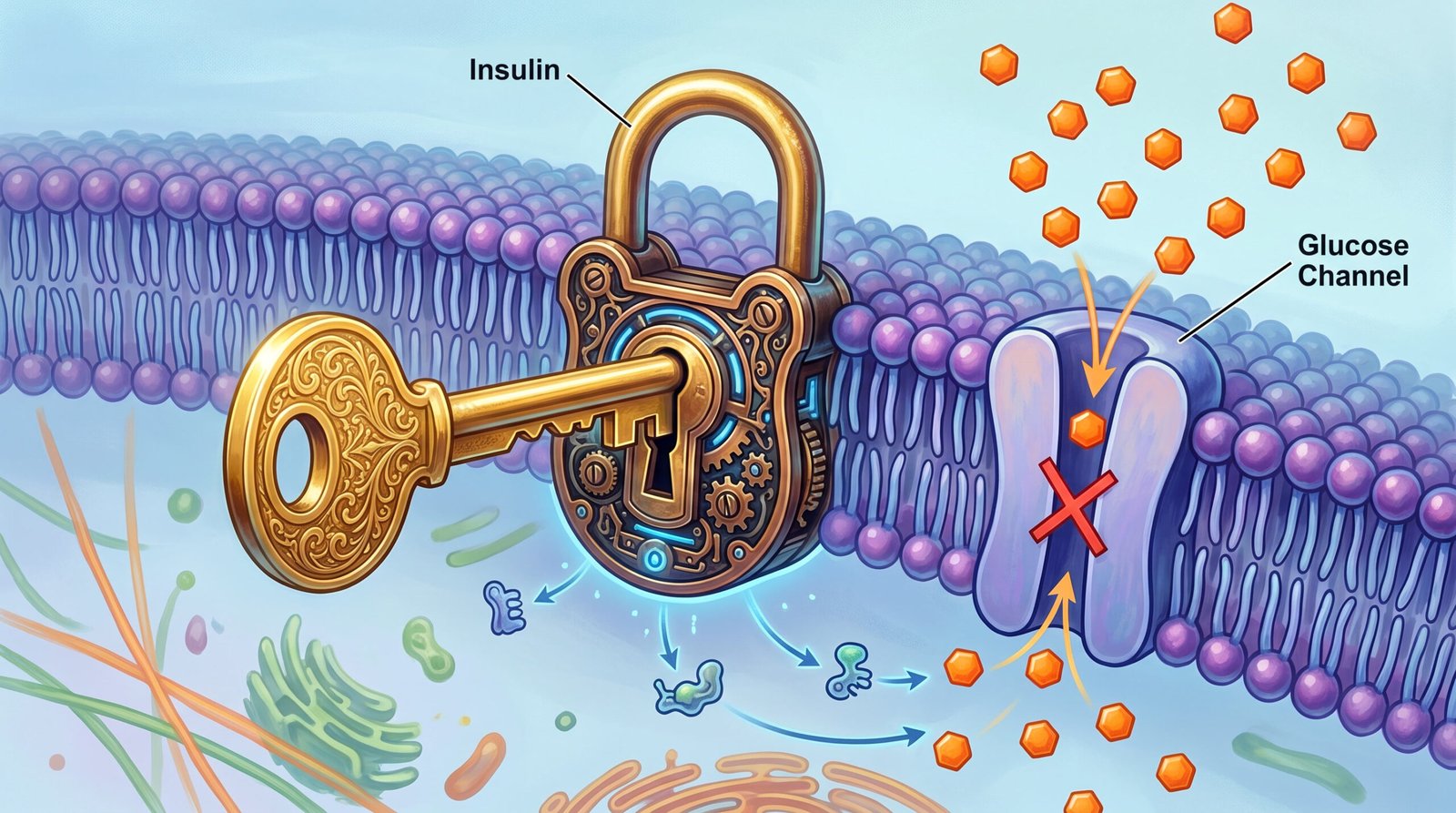
To understand insulin resistance, you need one simple image: a key and a lock. Insulin is the key. The glucose receptor on your cell is the lock. When insulin fits the receptor perfectly, glucose flows into the cell, where it’s converted into ATP — the energy currency your muscles, organs, and brain run on.
But when insulin resistance develops, the lock changes. The key no longer fits cleanly. Your pancreas compensates by producing more insulin, forcing the door open. For a while, it works. Blood sugar stays normal. But glucose delivery to individual cells becomes slower, less efficient, and more costly. Your body is running on a degraded fuel system — and you feel it.
Why cells become resistant in the first place
Chronic exposure to high insulin levels — driven by frequent refined carbohydrate intake, physical inactivity, and excess body fat — causes cells to downregulate their insulin receptors. This is the same protective desensitization mechanism seen with other hormones: too much signal, reduce the number of receivers.
Over time, the liver, skeletal muscle, and fat tissue all become progressively less responsive. The pancreas works harder to compensate. Eventually it can’t keep up — and that’s when blood glucose starts rising and a diagnosis of prediabetes or type 2 diabetes follows. But that endpoint is years away from where most people are right now.
The brain connection: why insulin resistance causes fog and flat energy
The brain has its own insulin receptors — primarily in the hippocampus, the region responsible for memory, learning, and mood regulation. A 2024 review published in Aging and Disease confirmed that brain insulin resistance exists even in non-diabetic states, impairing hippocampal neuroplasticity, synaptic function, and cognitive performance.
When insulin signaling in the brain is disrupted, cells can’t efficiently access glucose for energy — even when blood glucose is normal. The result: mental fatigue, slow processing, difficulty forming new thoughts, and a general sense of cognitive blunting that no amount of coffee reliably fixes.
I’m not 100% sure why this brain effect hits some people harder than others at the same metabolic stage — individual variation in receptor sensitivity likely plays a role. But the clinical picture is consistent enough that researchers have started calling advanced brain insulin resistance ‘type 3 diabetes’ in the context of Alzheimer’s disease research.
Why the afternoon crash is a metabolic event, not just tiredness
The classic 2pm wall isn’t random. After a carbohydrate-heavy lunch, insulin spikes sharply to manage blood sugar. In a person with insulin resistance, the spike is larger and longer — because the pancreas has to overshoot to achieve the same effect. When insulin eventually clears, blood glucose drops below baseline. Cortisol and adrenaline are released to compensate. That hormonal cascade is what you experience as the afternoon crash: irritability, fatigue, difficulty focusing, and a strong urge to eat something sweet to bring the system back up.
It’s a loop. And the sweet thing you eat to fix it restarts the same cycle an hour later.
The Fix: 4 Habits That Reverse Insulin Resistance
Insulin resistance isn’t permanent. Skeletal muscle — the largest glucose-consuming tissue in the body — is highly adaptable. Given the right inputs, insulin receptor sensitivity can be measurably restored. These four habits directly address the root mechanisms.
1. Cut refined carbs — not all carbs
Refined carbohydrates are the primary driver of chronic hyperinsulinemia. Every time you eat white bread, sugary drinks, packaged snacks, or refined cereals, you trigger a sharp insulin spike. Do that repeatedly across years, and the downregulation of insulin receptors follows predictably.
The target isn’t zero carbs. It’s replacing refined carbs — white flour, added sugar, processed starches — with slow-digesting alternatives: oats, legumes, sweet potatoes, vegetables, whole fruit. These produce a slower, lower insulin response, giving your receptors time to resensitize between meals.
Common mistake: going low-carb but replacing refined carbs with high amounts of saturated fat and processed meat. This can improve blood sugar short-term while quietly worsening inflammation, which drives insulin resistance through a separate pathway.
2. Add resistance training — it’s the most direct fix
Skeletal muscle is the body’s largest glucose sink. When muscle contracts during exercise, it activates GLUT4 transporters — proteins that pull glucose into the cell independent of insulin. This is a parallel pathway that bypasses the broken lock entirely. A 2024 review in Frontiers in Physiology confirmed that resistance training enhances this GLUT4 translocation mechanism, increases insulin receptor signaling, and significantly reduces HOMA-IR scores even in people without diabetes.
You don’t need a gym. Squats, push-ups, lunges, and resistance band work all activate the same pathway. Two to three sessions per week is enough to produce measurable changes in insulin sensitivity within 4 to 8 weeks.
Common mistake: only doing cardio. Walking and cycling improve cardiovascular health and have some metabolic benefit — but resistance training produces superior HOMA-IR reductions because it directly builds the glucose-absorbing tissue that insulin resistance depletes.
3. Fix your sleep — this one is non-negotiable
A single night of poor sleep measurably reduces insulin sensitivity in healthy adults. Chronic sleep restriction elevates cortisol and growth hormone at the wrong times of day, both of which directly oppose insulin’s action at the receptor level.
Research consistently shows a bidirectional relationship: insulin resistance worsens sleep quality (via blood sugar instability overnight), and poor sleep worsens insulin resistance (via cortisol elevation the next day). Breaking the cycle requires fixing sleep first. Read: how to sleep better naturally — this is probably the highest-leverage intervention if your sleep is currently poor.
Common mistake: prioritizing diet and exercise while accepting poor sleep as unavoidable. All three are required. Sleep deprivation can negate the insulin-sensitizing effects of a good diet and exercise program.
4. Time your meals with your biology
Insulin sensitivity follows a circadian pattern — it’s highest in the morning and drops significantly in the evening. Eating a carbohydrate-heavy meal at 9pm produces a much larger and more prolonged insulin spike than the same meal at 8am.
This doesn’t mean skipping dinner. It means front-loading calories and carbohydrates earlier in the day, keeping dinner protein and vegetable-heavy, and avoiding eating within 2–3 hours of sleep. This single timing adjustment reduces average daily insulin exposure without requiring any change in what you eat.Common mistake: eating a small breakfast and a large high-carb dinner. This is the exact pattern that maximizes daily insulin exposure and minimizes the window for receptor recovery.

Abdellah’s Experience: When I Realized the Crash Had a Cause
For a long time, I thought the 2pm wall was just part of doing physical work. I’d finish a warehouse shift, eat a large lunch — usually whatever was fast and filling — and then spend the next two hours in a fog. I told myself it was normal. Everyone on my team seemed to feel the same way.
Then I started cutting the white bread and sugary drinks I’d been eating without thinking, added 20 minutes of bodyweight squats and push-ups three times a week, and shifted my bigger meals earlier. I didn’t overhaul everything at once. Just those three things, consistently, for about six weeks.
The afternoon fog didn’t disappear overnight. But after about three weeks, it was noticeably lighter. After six, it was mostly gone. I still get tired. But it’s honest physical tiredness — not that particular kind of foggy, irritable drain that I now recognize as a metabolic event.
The crash wasn’t tiredness. It was my body telling me the fuel system was broken. Once I understood that, fixing it was simple — not easy, but simple.

Try This for 7 Days (Then Tell Me I’m Wrong)
One week won’t reverse years of insulin resistance. But it’s enough to feel the difference in energy stability — and once you feel it, you understand exactly what you were missing.
- Breakfast swap: replace any refined carb at breakfast with eggs, oats, or plain yogurt — no white bread, no sugary cereal, no juice
- 10-minute resistance session: 3 sets of bodyweight squats + push-ups, every other day — takes 10 minutes, activates the GLUT4 pathway directly
- Dinner shift: make dinner the smallest, lowest-carb meal of the day — protein, vegetables, olive oil. Eat it before 8pm
- No eating 2 hours before bed: give your insulin a clear window to drop overnight — this is when receptor resensitization happens
Track one thing: how you feel between 1pm and 4pm each day. That afternoon window is your metabolic readout. If the crash gets lighter by Day 4 or 5, the system is already responding.

The Real Reason You Feel This Way Isn’t in Your Head
Most people spend years managing the symptoms of insulin resistance without ever addressing the cause. They drink more coffee for the brain fog, accept the belly fat as inevitable, and assume the afternoon crash is just how adult life feels. It doesn’t have to be.
The four habits in this article aren’t complex. But they target the root mechanism directly — the receptor sensitivity, the glucose disposal pathway, the hormonal timing. That’s what makes the difference between treating the symptom and actually fixing the system.
And since low energy connects to multiple systems at once, this article pairs directly with: sarcopenia and muscle loss.
Table of Contents
Medical disclaimer
This content is for informational purposes only and does not constitute medical advice. Always consult a qualified healthcare professional for personal health concerns.