



You don’t feel thirsty. So you assume you’re hydrated.
But here’s what most people don’t know: thirst is a late-stage signal. By the time your brain triggers the thirst reflex, your body is already 1 to 2% dehydrated — and at that level, your cognitive function has measurably declined, your energy has dropped, and your brain is working harder than it should just to keep you upright and thinking.
The worst part? The symptoms of mild chronic dehydration look exactly like a dozen other problems. People blame stress, poor sleep, getting older, their diet. They never blame water — because they don’t feel thirsty. But that’s exactly the trap.
Why So Many People Walk Around Dehydrated Without Knowing It
According to research published in the European Journal of Clinical Nutrition, up to 75% of people in developed countries are chronically mildly dehydrated — not severely, not dangerously, just enough to quietly drag down how they feel and function every single day. Most of them have no idea.
The problem isn’t that people ignore water. It’s that the signs of mild dehydration are so normal-looking that nobody connects them to fluid intake. You’ve probably been living with some of these for years without ever considering that more water might be the answer.
Check how many of these you experience regularly:
- Tension headaches that appear in the afternoon with no obvious cause
- Brain fog — slow thinking, poor concentration, feeling mentally stuck
- Low energy or fatigue that coffee doesn’t fully fix
- Dry mouth, chapped lips, or skin that feels tight and dull
- Constipation or infrequent digestion with no change in diet
- Feeling irritable, anxious, or low-mood without a clear reason
If 3 or more of those hit close to home, there’s a good chance chronic mild dehydration is part of what you’re dealing with. And fixing it doesn’t require a lifestyle overhaul — it just requires water, at the right times, consistently.

What’s Actually Happening Inside Your Body
Water isn’t just something you drink because you’re thirsty. It’s the medium through which almost every biological process in your body runs — and when you’re even slightly short, the effects ripple through everything.
Your brain shrinks — literally — when you’re dehydrated
Your brain is approximately 75% water. Even mild dehydration causes measurable changes in brain volume and function. A landmark study in the Journal of Nutrition found that women who were just 1.36% dehydrated — well below the thirst threshold — reported significantly worse mood, more difficulty concentrating, and increased perception of task difficulty. The brain doesn’t have a reserve tank. Every percentage point of fluid loss hits it directly.
This is why dehydration-related brain fog doesn’t feel like thirst. It feels like you’re just having a bad mental day. And most people chalk it up to that.
Blood volume drops and your heart works harder
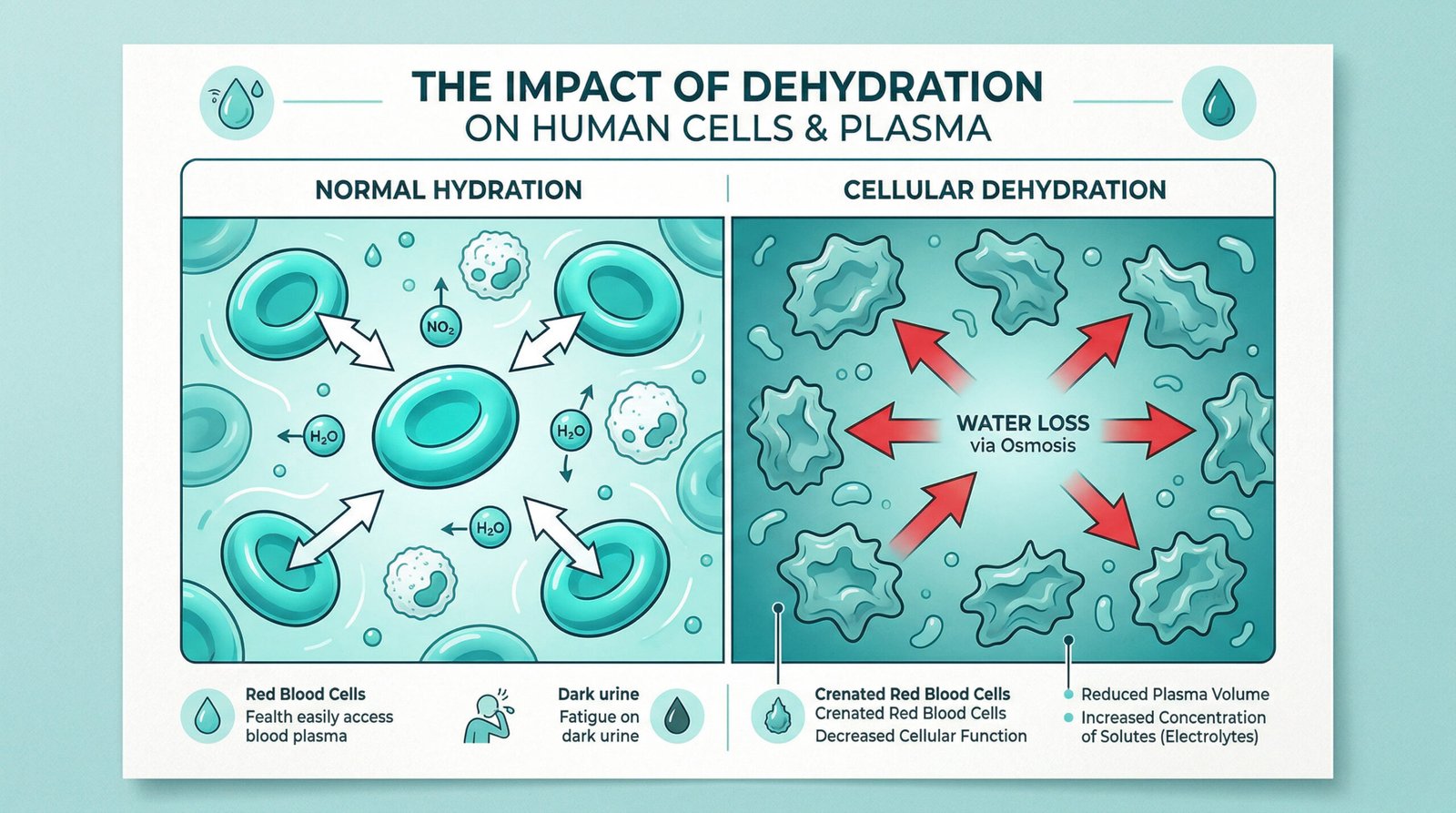
About 55% of your blood is plasma — which is mostly water. When you’re dehydrated, plasma volume decreases, which means your blood thickens and your heart has to pump harder to circulate it. The result: elevated resting heart rate, reduced oxygen delivery to muscles and organs, and a pervasive feeling of physical heaviness and fatigue even during light activity.
This is also why dehydration can cause or worsen tension headaches. Lower blood volume means reduced blood flow to the brain — and the resulting pressure changes are felt as a dull, persistent ache behind the eyes or at the temples.
Your kidneys signal the body to hold onto sodium — and that creates its own problems
When fluid levels drop, your kidneys activate the renin-angiotensin-aldosterone system — a hormonal cascade designed to retain sodium and water. But this retention also concentrates waste products in your blood, slows digestion, and contributes to that bloated, sluggish feeling that so many people mistake for eating the wrong food. According to Healthline’s review of hydration research, adequate daily water intake reduces kidney stone risk, improves digestive regularity, and measurably lowers markers of systemic inflammation. Honestly, the scope of it surprised me when I read through the evidence — it’s not just about thirst.
The Fix: 4 Hydration Habits That Actually Work
Drinking more water sounds obvious. But the reason most people fail at it isn’t willpower — it’s that they try to drink reactively instead of building it into structure. These four habits solve that.
1. Start with 2 glasses before anything else in the morning
After 6 to 8 hours without fluids, you wake up in a state of mild dehydration every single morning. Your blood is slightly thicker, your brain is slightly sluggish, and your organs are already waiting for fluid before they can run at full speed. Two glasses of water — around 500ml — before coffee, before food, before your phone, changes the entire trajectory of your morning.
Common mistake: counting your morning coffee as hydration. Caffeine has a mild diuretic effect — it doesn’t replace plain water, especially first thing.
2. Drink before you eat, not after
Your digestive system needs adequate fluid to produce the enzymes and stomach acid that break down food properly. Drinking 1 glass of water 15 to 20 minutes before each meal improves digestion, reduces the likelihood of overeating, and helps maintain blood volume throughout the day. It also means you’re drinking water at predictable anchor points — meals — instead of trying to remember randomly throughout the day.
Common mistake: drinking large amounts of water during a meal. It can dilute digestive enzymes mid-process. Before the meal is the right window.
3. Use urine colour as your daily check
You don’t need a tracking app. Pale yellow — similar to lemonade — means you’re well hydrated. Dark yellow or amber means you’re behind. Clear can mean you’ve overhydrated slightly, which is rarely a problem but worth noting. Check once in the morning and once in the afternoon. Those two data points tell you everything you need to adjust the rest of your day.
Common mistake: only checking in the morning. Morning urine is naturally more concentrated after overnight fasting — it’s the afternoon check that gives you the most useful real-time signal.
4. Eat your water too
About 20% of your daily fluid intake comes from food — if you’re eating the right things. Cucumber, watermelon, oranges, strawberries, celery, and cooked oats all have very high water content. Adding one or two of these to your daily meals gives you a passive hydration boost without thinking about it. And because they also contain electrolytes like potassium and magnesium, they hydrate more effectively than plain water alone.
Common mistake: relying only on water and ignoring food-based hydration. On hot days or physically demanding days, food-sourced fluids and electrolytes make a meaningful difference.

Abdellah’s Experience: What Changed for Me
For most of my time at the warehouse, I was running on 2 or 3 cups of coffee and barely any water. I thought I was fine. I wasn’t thirsty — so I figured I didn’t need it. But I had a tension headache almost every afternoon, and my brain felt like it was wrapped in cotton by 3pm.
A colleague mentioned offhand that he kept a 1.5-litre bottle on the forklift and finished it before his lunch break. I thought that was excessive. I tried it anyway for one week. Two glasses before leaving the house, the bottle during the shift, one glass before dinner.
The afternoon headaches were gone by Day 4. Gone — not reduced. Gone. And my focus at the end of a shift was noticeably sharper than it had been for months.
I wasn’t tired. I was just dry.

Try This for 3 Days (Then Tell Me I’m Wrong)
Don’t overhaul anything. Just add structure around water for 72 hours:
- Morning: drink 2 full glasses of water before coffee or food
- Pre-meal: drink 1 glass 15 minutes before each of your 3 meals
- Mid-afternoon: drink 1 glass at 2pm — before the slump hits, not after
- Check your urine colour twice a day and adjust accordingly
- Add one high-water food daily: cucumber, watermelon, orange, or celery
On Day 1, note your energy level, head tension, and mental clarity at 3pm. Compare to Day 3. Most people notice the afternoon headaches soften within 48 hours. Brain fog usually follows within the same window.

The Real Reason You Feel This Way Has a Simple Answer
Most people spend years troubleshooting their fatigue, focus, and mood — trying supplements, better sleep schedules, caffeine cycling — without ever fixing the most basic variable first.
Water is boring. That’s exactly why it gets ignored. But boring answers fix real problems, and this one fixes more than most people expect.
If you want to build on this, the next logical step is fixing your morning routine to lock in hydration from the start — read: morning habits that boost energy and focus. And if poor sleep is also part of your picture, this connects directly with: why you feel tired every day even after rest.
Table of Contents
Medical disclaimer
This content is for informational purposes only and does not constitute medical advice. Always consult a qualified healthcare professional for personal health concerns.