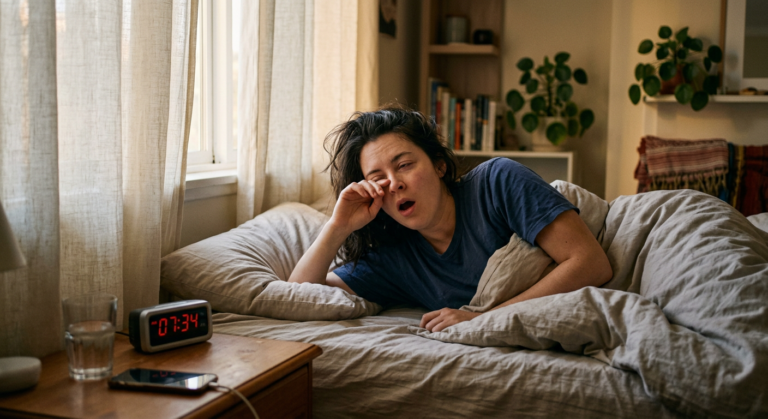



You think coffee gives you energy.
It doesn’t. And I mean that literally — caffeine doesn’t produce energy in your body. What it does is block the signal that tells your brain it’s tired. There’s a difference. A big one. And once you understand it, you’ll see why drinking coffee the way most people do is actually making your fatigue worse over time, not better.
If you need coffee to function in the morning, crash hard in the afternoon, and can’t sleep properly at night — your coffee habit is part of the problem. Not the solution.
Why So Many Coffee Drinkers Still Feel Exhausted All Day
Most people know coffee works. What they don’t know is why it stops working — and why they keep needing more of it to get the same effect. According to a survey published in the journal Nutrients, over 60% of regular coffee drinkers report afternoon energy slumps despite consuming caffeine, and many drink 3 to 5 cups per day just to maintain baseline function.
That’s not energy. That’s dependency. And the way most people drink coffee is specifically designed — by accident — to make it worse.
You probably recognize at least a few of these:
- Coffee first thing in the morning, before water or food — every single day
- Afternoon crash that hits hard around 2 to 3pm, no matter how much you’ve had
- Needing coffee just to feel normal, not even good — just functional
- Trouble falling asleep or staying asleep, even when you’re genuinely tired
- Feeling jittery, anxious, or irritable after drinking — but drinking anyway
If 3 or more of those hit close to home, the good news is: none of it is permanent. You’re not broken. You’ve just been drinking coffee at the wrong time, in the wrong way, for a long time.

What’s Actually Happening Inside Your Body
Caffeine doesn’t give you energy the way food does. It borrows it. And understanding the biology of how that works is what changes everything about when and how you should drink it.
Caffeine blocks adenosine — but doesn’t delete it
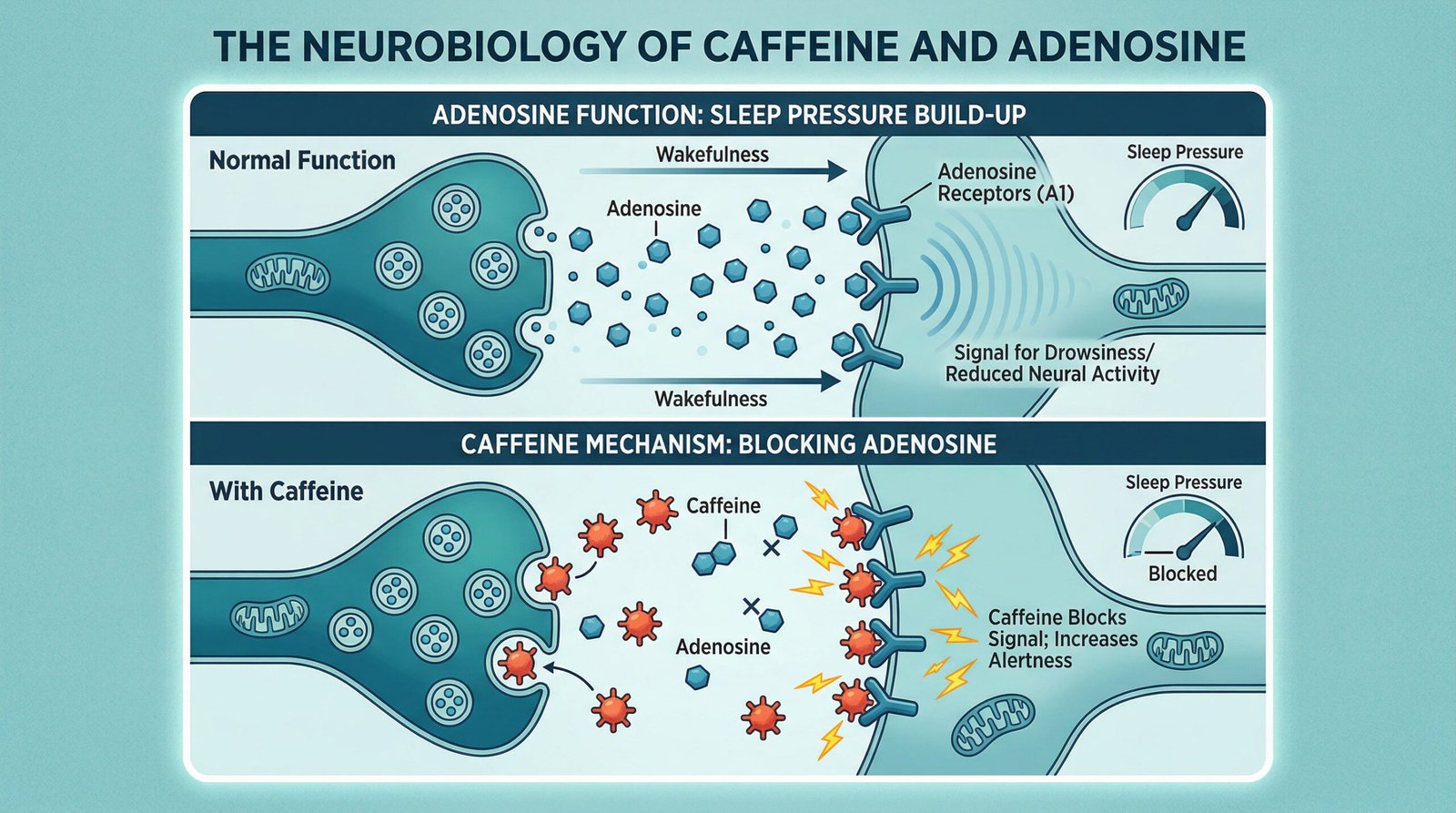
Adenosine is a chemical your brain produces throughout the day as a byproduct of being awake and active. The more adenosine that accumulates, the sleepier you feel — this is called sleep pressure. Caffeine works by fitting into adenosine receptors and blocking them, so the signal can’t get through.
But here’s the problem: the adenosine doesn’t go away. It just waits. The moment caffeine clears your system — usually 4 to 6 hours later — all that accumulated adenosine floods in at once. That’s your afternoon crash. It’s not a coincidence. It’s chemistry.
Drinking coffee on an empty stomach spikes cortisol
Your cortisol levels are naturally highest in the first 30 to 45 minutes after waking — this is called the cortisol awakening response, and it’s your body’s built-in alertness mechanism. When you drink caffeine during this window, you’re stacking a stimulant on top of an already-elevated stress hormone. The result is often anxiety, jitteriness, and a sharper crash when both drop off together.
A 2021 review in the British Journal of Nutrition confirmed that delaying your first coffee by 60 to 90 minutes after waking leads to more stable energy and better mood throughout the morning. Honestly, this one surprised me when I first read it — the window matters more than most people think.
Caffeine disrupts your sleep even when you don’t feel it
Caffeine has a half-life of roughly 5 to 7 hours in the average person. That means a cup at 3pm still has half its caffeine active in your system at 9pm. This doesn’t always prevent you from falling asleep — but it reduces deep sleep quality significantly. You might sleep 8 hours and still wake up unrefreshed, because caffeine was suppressing the restorative stages of sleep all night.
Poor sleep creates more fatigue. More fatigue means more coffee. And the cycle feeds itself until the whole thing collapses.
The Fix: 4 Rules That Change How Coffee Feels
You don’t need to quit coffee. I’m not going to tell you that — I still drink it and I’m not going back. But these four changes are the difference between coffee that works and coffee that slowly grinds you down.
1. Wait 90 minutes before your first cup
Let your cortisol awakening response do its job first. Get up, drink water, eat something, let your body run its natural alertness cycle for 60 to 90 minutes — then have your coffee. The caffeine lands better when cortisol is starting to decline, the boost lasts longer, and the crash is noticeably less severe.
Common mistake: setting the coffee maker on a timer so it’s ready the second you wake up. That’s the exact window you want to skip.
2. Drink water before you drink coffee
After 6 to 8 hours without fluids, you’re mildly dehydrated when you wake up. Caffeine is a mild diuretic — it increases fluid loss slightly. If you’re already dehydrated and you add caffeine, you’re compounding the fatigue, brain fog, and headache risk before your day has even started. Two glasses of water first. Every time. Non-negotiable.
Common mistake: counting coffee as hydration. It partially counts, but it doesn’t replace water — especially first thing.
3. Set a hard cutoff at 1pm
Based on average caffeine metabolism, anything consumed after 1pm is still partially active in your bloodstream at midnight. If you’re struggling to sleep, or waking up unrefreshed, this is almost certainly part of it. I know the afternoon slump makes a 2pm coffee feel necessary — but that slump exists partly because of yesterday’s coffee. Cut the afternoon caffeine for 5 days and see what happens to your sleep.
Common mistake: using afternoon coffee to fight the crash that morning coffee caused. It works for an hour. Then it makes tomorrow worse.
4. Eat something before or with your first cup
Drinking coffee on a completely empty stomach accelerates caffeine absorption, amplifies the cortisol spike, and often causes nausea, anxiety, or a shorter, sharper buzz followed by a harder crash. Even a banana, a handful of nuts, or a slice of bread is enough to slow the absorption and smooth the curve. Protein works best — eggs or yogurt with your coffee is the optimal combination for stable morning energy.
Common mistake: using coffee as a substitute for breakfast. Caffeine suppresses appetite short-term, which makes skipping meals easy — and makes the energy crash inevitable.

Abdellah’s Experience: What Changed for Me
At the warehouse, coffee was survival. I’d have the first one before I left the house — still half asleep — and two more before noon. By 2pm I was useless. I thought I just needed more sleep or a lighter job.
Then I tried one thing: moving my first coffee to 90 minutes after waking, and stopping completely after 1pm. That’s it. Nothing else changed.
Within a week, the afternoon wall I’d been hitting every day for years was gone. Not smaller — gone. And I was falling asleep faster at night than I had in months. Same job, same hours, same amount of coffee.
The coffee wasn’t the problem. The timing was.

Try This for 5 Days (Then Tell Me I’m Wrong)
Don’t change your coffee amount. Just change the rules around it:
- Wake up — drink 2 glasses of water before anything else
- Wait 60 to 90 minutes before your first coffee
- Eat something before or alongside that first cup
- Set a hard cutoff: no coffee after 1pm
- If you get an afternoon slump, drink water and take a 5-minute walk instead
Track how you feel on Day 1 versus Day 5. Most people notice they’re sleeping better within 3 days, and the afternoon crash starts softening by Day 4. Give it the full 5 before you judge it.

The Real Reason Coffee Stopped Working for You
Coffee didn’t fail you. You just never learned the operating instructions.
Caffeine is a tool — and like any tool, how and when you use it determines whether it works for you or against you. The biology is simple once you know it. The fix is even simpler.
If you want to go deeper on building morning energy that doesn’t depend on caffeine at all, read: morning habits that boost natural energy. And if poor sleep is part of your cycle, this pairs directly with: how to sleep better naturally without medication.
Table of Contents
Medical disclaimer
This content is for informational purposes only and does not constitute medical advice. Always consult a qualified healthcare professional for personal health concerns.