

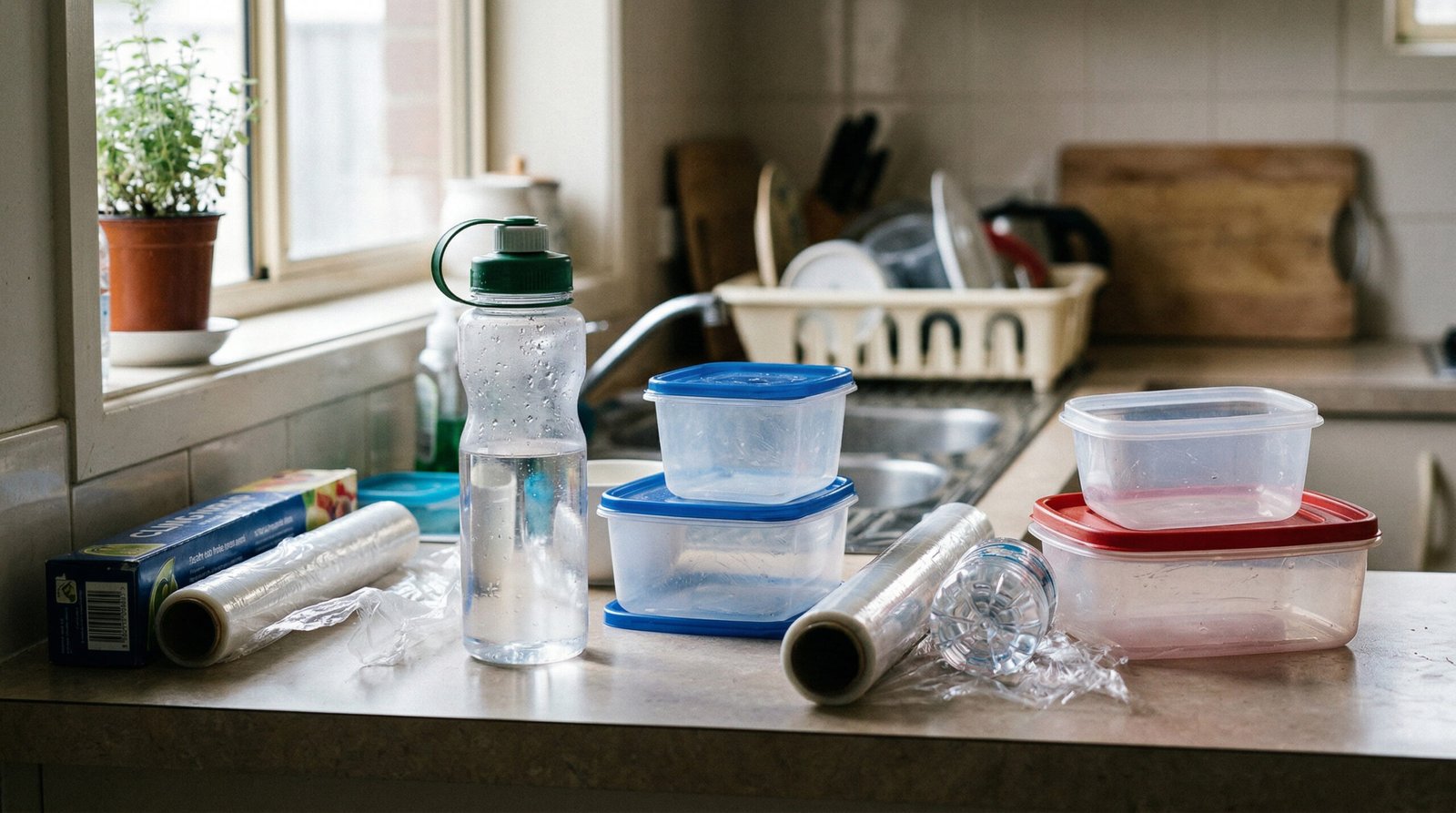

Scientists estimate the average adult ingests the equivalent of one credit card’s worth of plastic every week. That number gets shared a lot. What gets shared less is what happens to that plastic once it’s inside you.
It doesn’t just pass through. A fraction of microplastic particles — depending on their size — cross biological barriers. They’ve been found in human blood, lungs, liver, brain tissue, and most recently, embedded inside arterial plaque in the heart. Not in trace amounts. In measurable, documented concentrations.
This isn’t a future risk. It’s a present one. And while nobody can tell you exactly how dangerous it is yet — because the research is still catching up with the reality — what we already know is serious enough to act on.
Why So Many People Are Unknowingly Exposed to Microplastics Every Single Day
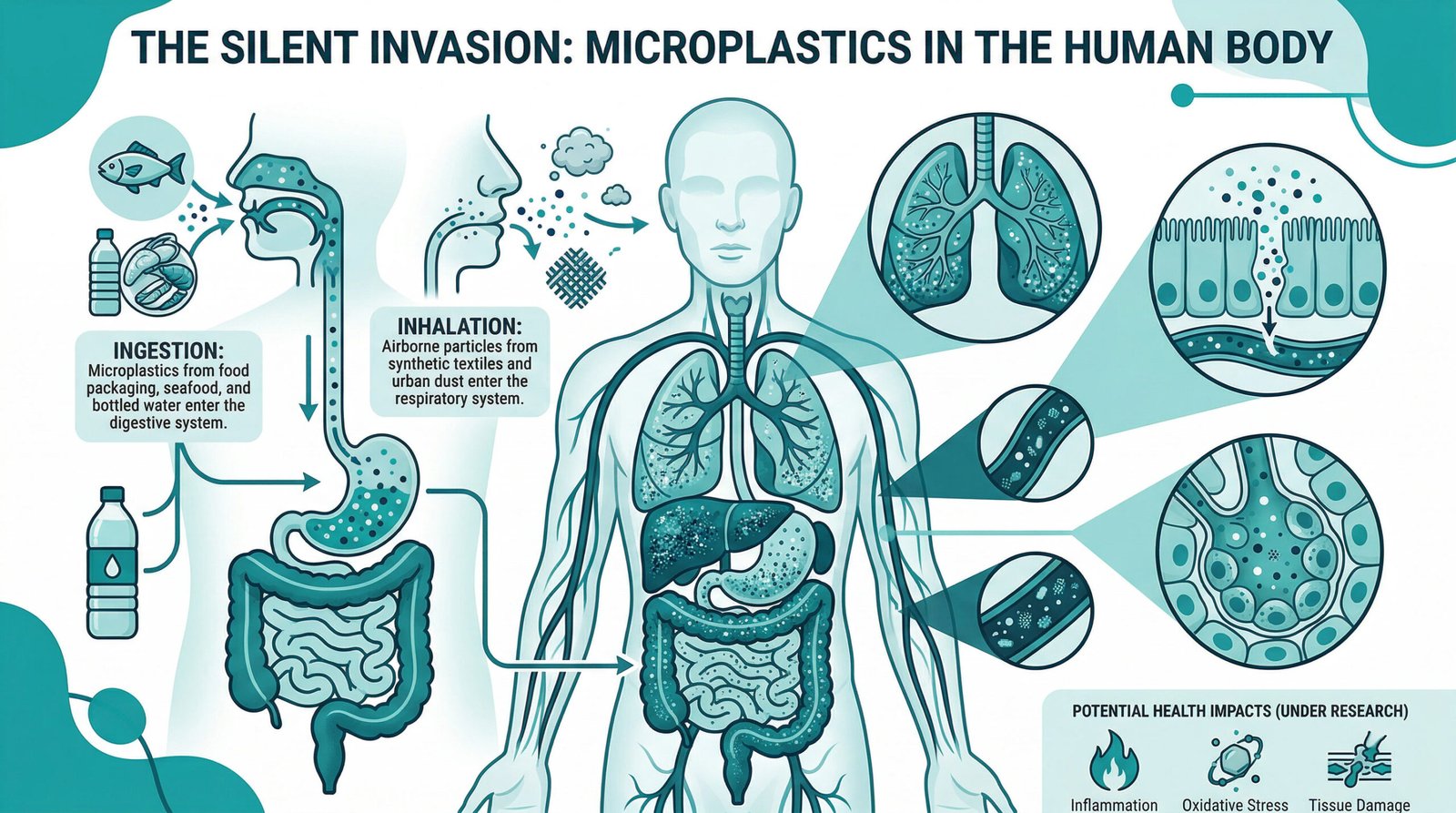
Microplastics are plastic particles smaller than 5mm — often invisible to the naked eye. They shed from plastic bottles when heated, from synthetic clothing when washed, from food packaging, from the air inside buildings, from tap water, from sea salt, from seafood, from tea bags. They’re in rain. They’ve been found at the top of Mount Everest and in Antarctic ice.
There is no plastic-free environment left on Earth. And because we’ve been producing plastic at accelerating scale since the 1950s, these particles have been accumulating in ecosystems — and in human tissue — for decades without anyone looking for them.
The exposure routes that matter most in daily life are:
- Drinking from plastic bottles, especially when warm or repeatedly reused
- Eating food heated in plastic containers or wrapped in plastic film
- Drinking tap or filtered water — both contain microplastics, just in different amounts
- Breathing indoor air, which carries microplastic fibres from synthetic textiles and dust
- Eating seafood, sea salt, honey, and beer — all documented sources
You can’t eliminate exposure. But you can meaningfully reduce it — and given what the early research is showing, that matters.
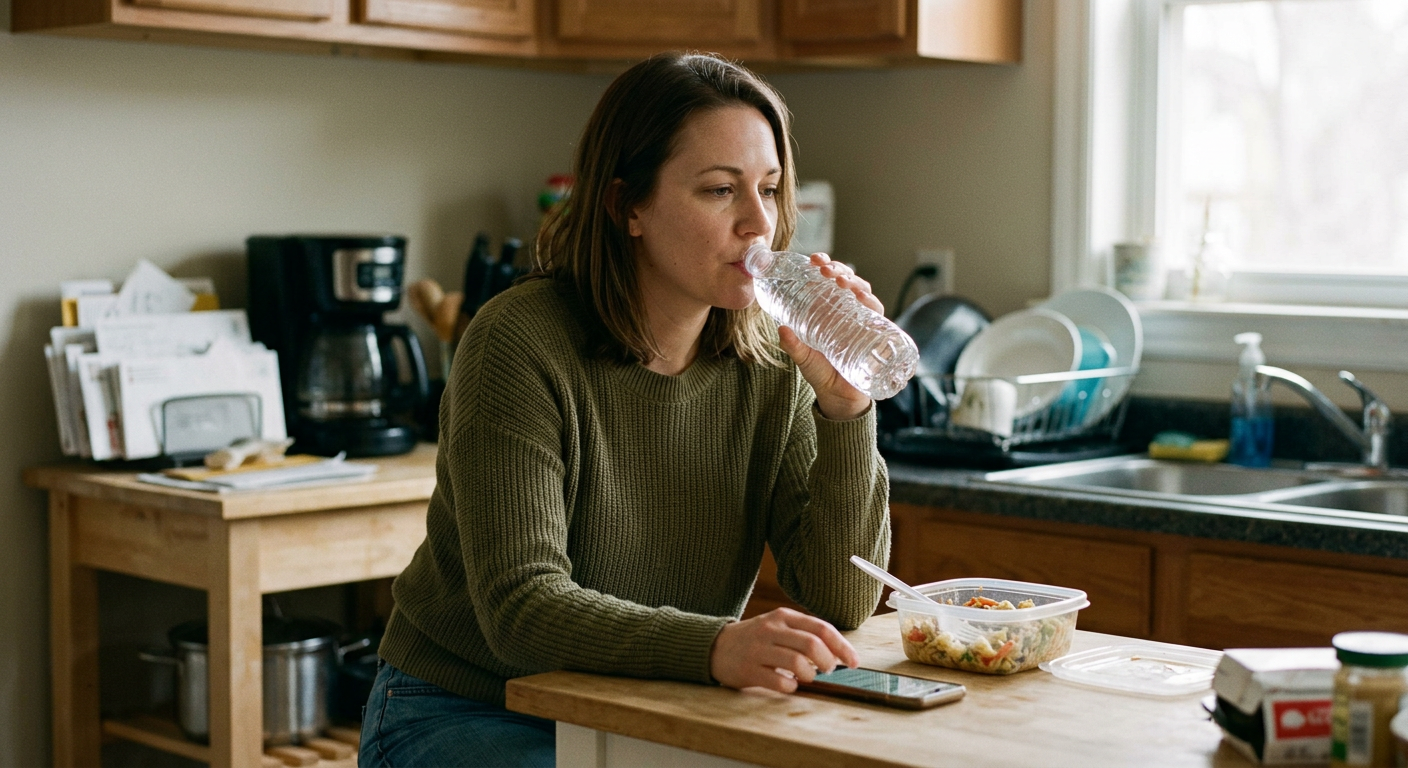
What’s Actually Happening Inside Your Body
The science here is honest about what it knows and what it doesn’t. Direct human evidence is still limited — most mechanistic research is in animal models and cell studies. But what’s already been found in human tissue is striking enough to take seriously.
Microplastics have been found in human hearts and arteries
A landmark 2024 study published in the New England Journal of Medicine examined arterial plaque surgically removed from 257 patients with carotid artery disease. Polyethylene — the most common plastic — was detected in the plaque of 58.4% of patients. The patients in whom microplastics were detected had a 4.53 times higher risk of heart attack, stroke, or death over the following 34 months compared to those without detectable plastics.
The authors were careful to note this doesn’t prove causation — the plastics could be accumulating in already-damaged tissue rather than causing the damage. But the association is striking. And it’s the first prospective human study to link microplastic burden directly to clinical outcomes.
Separate research has since found microplastics in coronary arteries, heart tissue, human brain samples, fetal cord blood, and placental tissue. These particles are not staying where they enter. They’re moving through barriers that were designed to keep foreign material out.
Microplastics trigger inflammation and hormonal disruption
Once inside tissue, microplastics don’t sit quietly. Their surfaces are chemically active — they carry absorbed pollutants, plasticisers, and additive chemicals that leach from the plastic itself. Many of these compounds — including BPA, phthalates, and PFAS — are known endocrine disruptors.
A 2025 review published in The Lancet Planetary Health summarised evidence linking microplastic and nanoplastic exposure to metabolic disorders, respiratory disease, cardiovascular disease, neuroendocrine disruption, and reproductive harm — including effects on testosterone, sperm quality, and female reproductive hormones.
The primary mechanism driving most of these effects is chronic low-grade inflammation. Microplastics that reach tissue trigger an immune response — the body recognises them as foreign and attacks. But because the particles can’t be digested or eliminated, the inflammatory response doesn’t resolve. It becomes persistent. And chronic inflammation is the underlying mechanism behind most modern diseases.
The gut barrier and the brain are particularly vulnerable
The gut is the primary entry point for ingested microplastics. Once inside the intestine, smaller particles can cross the gut lining and enter the bloodstream — and from there, potentially the blood-brain barrier.
Animal studies have shown microplastics disrupting gut microbiota composition, increasing intestinal permeability (the ‘leaky gut’ mechanism), and triggering neuroinflammation through the gut-brain axis. The neurotoxicity research is still early, but the pathway from gut to brain is already biologically documented. I’ll be honest — the full picture of what microplastics do inside the human body won’t be clear for years. The particles are everywhere, exposure is constant, and isolating their specific effects from all the other variables in human health is genuinely difficult. But ‘we don’t know everything yet’ is different from ‘there’s nothing to worry about.
The Fix: 5 Practical Ways to Reduce Your Microplastic Exposure
You can’t reach zero. But you can make meaningful reductions in your daily load — and the changes that have the biggest impact are usually the simplest ones.
1. Switch from plastic to glass or stainless steel for water and food storage
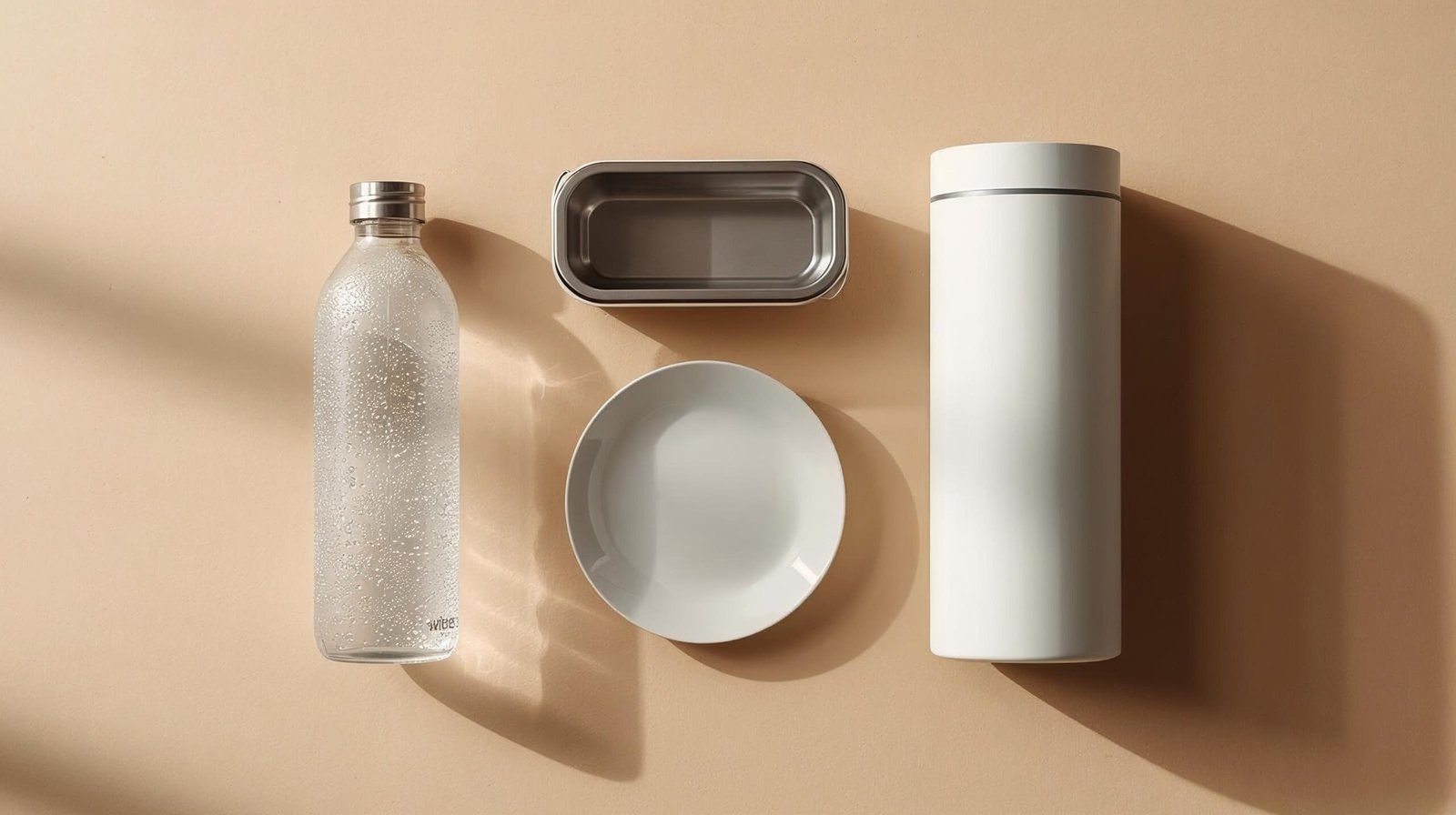
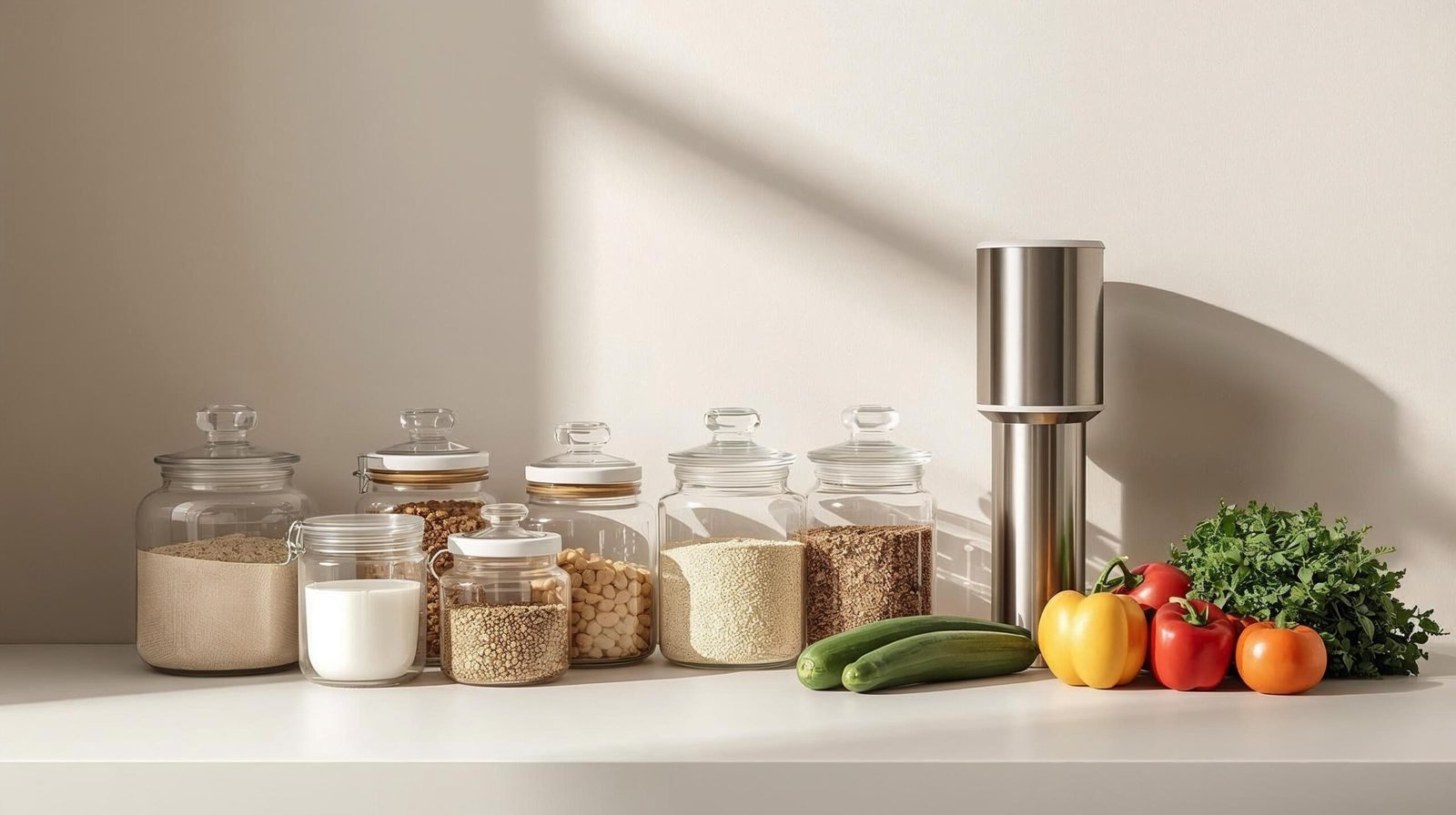
This is the single highest-impact change most people can make. Plastic bottles and containers shed the most particles when heated, scratched, or repeatedly used. Glass and stainless steel don’t.
Start with your water bottle — a glass or stainless steel bottle used daily eliminates one of your biggest plastic contact points immediately. Then move to food storage: glass containers for leftovers, especially anything you reheat.
Common mistake: buying BPA-free plastic as a solution. BPA-free plastics still shed microplastic particles and often contain replacement chemicals with similar hormonal activity. The plastic is the problem, not just the BPA.
2. Never heat food in plastic containers
Heat dramatically accelerates the release of microplastic particles and chemical additives from plastic. A single session of microwaving food in a plastic container releases millions of particles into the food — far more than cold or room-temperature exposure.
Transfer food to a glass bowl, ceramic dish, or plate before heating. Every time. This is the single easiest habit change with the most direct reduction in microplastic ingestion.
Common mistake: assuming food-grade or microwave-safe plastic is safe to heat. ‘Microwave-safe’ means the container won’t melt — not that it won’t shed particles into your food. Those are different things.
3. Filter your tap water — but choose the right filter
Both tap water and bottled water contain microplastics. Tap water generally contains fewer particles than bottled water — and unlike bottled water, it isn’t sold in a plastic container that sheds more particles over time.
A countertop or under-sink filter with activated carbon or reverse osmosis removes a significant proportion of microplastics from tap water. Running tap water through a standard filter is a meaningful step — and it’s cheaper than buying plastic bottles, which adds more plastic exposure on top.
Common mistake: buying more bottled water to avoid tap water microplastics. The plastic bottle itself is a microplastic source. Filtered tap water in a glass or stainless steel container is lower exposure than any commercially bottled water.
4. Reduce synthetic textile exposure in your home
Synthetic fabrics — polyester, nylon, acrylic — shed plastic microfibres constantly, especially during washing and drying. These fibres accumulate in indoor air and household dust, and you breathe them in all day.
Washing synthetic clothing in a microfibre-catching laundry bag (like a Guppyfriend bag) captures the majority of fibres before they enter the water system. Ventilating your home regularly and using a vacuum with a HEPA filter reduces the concentration of synthetic fibres in indoor air.
Common mistake: only thinking about microplastics in food and water. Indoor air is a significant exposure route — particularly for people who wear or own a lot of synthetic clothing, carpets, or upholstered furniture.
5. Eat less seafood from polluted sources and cut processed food packaging
Seafood — especially shellfish, which filter large volumes of seawater — concentrates microplastics from the marine environment. This doesn’t mean stop eating fish, but sourcing seafood from cleaner waters and varying your sources reduces cumulative exposure.
Processed and packaged foods in general carry higher microplastic loads than whole foods. Choosing fresh produce, cooking from raw ingredients, and reducing plastic-wrapped convenience foods lowers your daily intake across multiple exposure routes at once.
Common mistake: focusing only on plastic packaging and ignoring the food itself. The microplastics in seafood and processed food are already inside the product — they don’t come just from the packaging around it.
Abdellah’s Experience: What Changed for Me
I didn’t start thinking about microplastics for health reasons. I started because I kept reading research that bothered me and I couldn’t un-read it. The NEJM study in particular — plastic found in the arteries of over half the patients tested — made it impossible to treat this as a distant concern.
I made three changes within a week: replaced my plastic water bottle with a stainless steel one, stopped microwaving anything in plastic, and added a countertop water filter. That was it. Nothing dramatic.
I can’t tell you I felt a difference — that’s not how this works. Microplastics accumulate over years, and the damage, if any, is slow and silent. But I stopped telling myself the risk was too uncertain to act on. That’s its own kind of change.You don’t need certainty to make a sensible decision. You just need the information.

Try This for 7 Days (Then Tell Me It Wasn’t Worth It)
You don’t need to overhaul your life. Start with three changes this week:
- Replace your plastic water bottle with a glass or stainless steel one — today, not next week
- Stop microwaving food in plastic containers — transfer to a glass bowl or plate every time
- If you drink tap water, add a basic countertop filter and use a glass to drink from
- Check your kitchen — how many plastic containers do you use daily? Replace the top 2 with glass
These four changes cut your highest-volume daily exposure points. They’re not inconvenient once you’ve made the switch — and unlike most health habits, they cost less over time, not more.
The Real Reason Microplastics Are a Problem Nobody Talks About Enough
They’re invisible. They don’t cause an immediate reaction. The damage, if it’s happening, is slow — measured in years and decades, not days. And because of that, it’s easy to treat this as someone else’s problem or a future problem.
But the science is no longer speculative. Microplastics are in human hearts. They’re in human brains. The first prospective human study shows they’re associated with significantly worse cardiovascular outcomes. We don’t need to wait for definitive proof to make the simple changes that reduce daily exposure. Want to go deeper on inflammation — the core mechanism behind microplastic damage? Read: Your Gut Is Running Your Brain (And You Don’t Even Know It) — it covers the gut-brain axis and how gut inflammation spreads systemically.
Table of Contents
Medical disclaimer
This content is for informational purposes only and does not constitute medical advice. Always consult a qualified healthcare professional for personal health concerns.