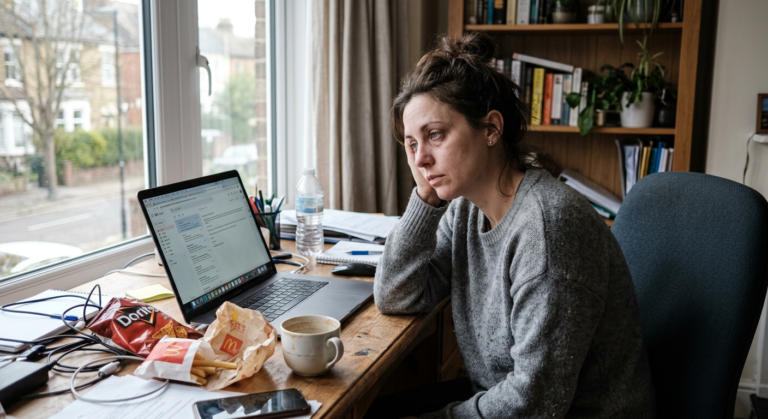



The 2pm wall is not a personality flaw.
It’s not because you’re lazy, out of shape, or bad at managing your day. That specific crash — the sudden brain fog, the craving for sugar, the complete loss of motivation that hits like a wave around midday — has a precise biological cause. And most people have been accidentally triggering it every single morning without knowing it.
If you’ve accepted the afternoon slump as just part of your day, this article might genuinely change how you structure your meals. Because once you understand what’s driving the crash, stopping it is surprisingly simple.
Why So Many People Hit an Energy Wall Every Single Afternoon
Blood sugar crashes are one of the most common and most ignored causes of daily fatigue. According to a study published in Nature Metabolism, blood sugar spikes and crashes — even in people without diabetes — are far more frequent and more significant than most people realize, with the average person experiencing multiple sharp glucose swings throughout the day depending on what they ate.
The issue isn’t just that the crashes feel bad. It’s that each crash triggers a stress hormone response, disrupts your focus and mood, and then sets up your next craving — locking you into a cycle that repeats every few hours. Most people treat the symptom (grabbing a biscuit or another coffee) without ever touching the cause.
Here’s what a blood sugar crash actually looks and feels like:
- A sudden drop in focus and mental sharpness around 1 to 3pm
- An almost irresistible craving for something sweet, starchy, or caffeinated
- Irritability or a short fuse that appears out of nowhere
- Feeling shaky, lightheaded, or slightly nauseous without eating for a few hours
- A deep physical heaviness — like your body wants to shut down mid-afternoon
- Waking up hungry in the middle of the night even after a full dinner
If 3 or more of those apply to you on most days, your blood sugar is cycling instead of staying stable. And that’s fixable — not with willpower, but with the right meal structure.

What’s Actually Happening Inside Your Body
Your cells run on glucose — the simplest form of sugar your body extracts from carbohydrates. The amount of glucose circulating in your blood at any given moment is tightly regulated by two hormones: insulin and glucagon. When that system gets overwhelmed by a flood of fast sugar, the whole rhythm breaks down.
The spike-crash cycle — and why it keeps repeating
When you eat something high in simple carbohydrates — white bread, sugary cereal, fruit juice, pastries — your blood glucose rises sharply and quickly. Your pancreas responds by releasing a surge of insulin to clear the glucose out of your blood and into your cells. But if the spike is large and fast, the insulin response often overshoots — it clears too much glucose, pushing blood sugar below the comfortable baseline.
That dip is the crash. Your brain — which runs almost exclusively on glucose — immediately signals distress. Cortisol and adrenaline are released to push stored glucose back into the blood. You feel anxious, irritable, foggy, and desperate for fast sugar. And the moment you eat something sweet to fix it, the cycle starts again.
Skipping breakfast makes everything worse
When you skip breakfast — or eat only coffee and nothing else — your blood sugar stays low from the overnight fast well into the morning. Your body compensates by raising cortisol to mobilize stored glucose, which keeps you functioning but keeps your stress hormones elevated. When you eventually eat, especially if it’s something fast-digesting, the glucose hits a system that’s already tightly wound — and the spike is sharper and the subsequent crash is harder.
A 2019 study in the American Journal of Clinical Nutrition found that people who ate a protein-rich breakfast had significantly more stable blood glucose levels, lower cortisol throughout the morning, and better sustained cognitive performance compared to those who skipped it or ate a carbohydrate-only breakfast. Honestly, I wasn’t expecting the cortisol connection to be that direct — but the data is consistent across multiple studies.
Insulin resistance quietly develops from repeated spikes
Over time, if your cells are repeatedly flooded with insulin, they start to become less responsive to it — a process called insulin resistance. Your pancreas has to produce more insulin to achieve the same effect, which amplifies the spike-crash cycle, increases fat storage, promotes inflammation, and impairs the mitochondria — the structures inside your cells that produce energy. According to the NHS, insulin resistance is the precursor to Type 2 diabetes and is also directly linked to chronic fatigue, brain fog, and difficulty losing weight. It doesn’t develop overnight, but daily blood sugar cycling accelerates it significantly.
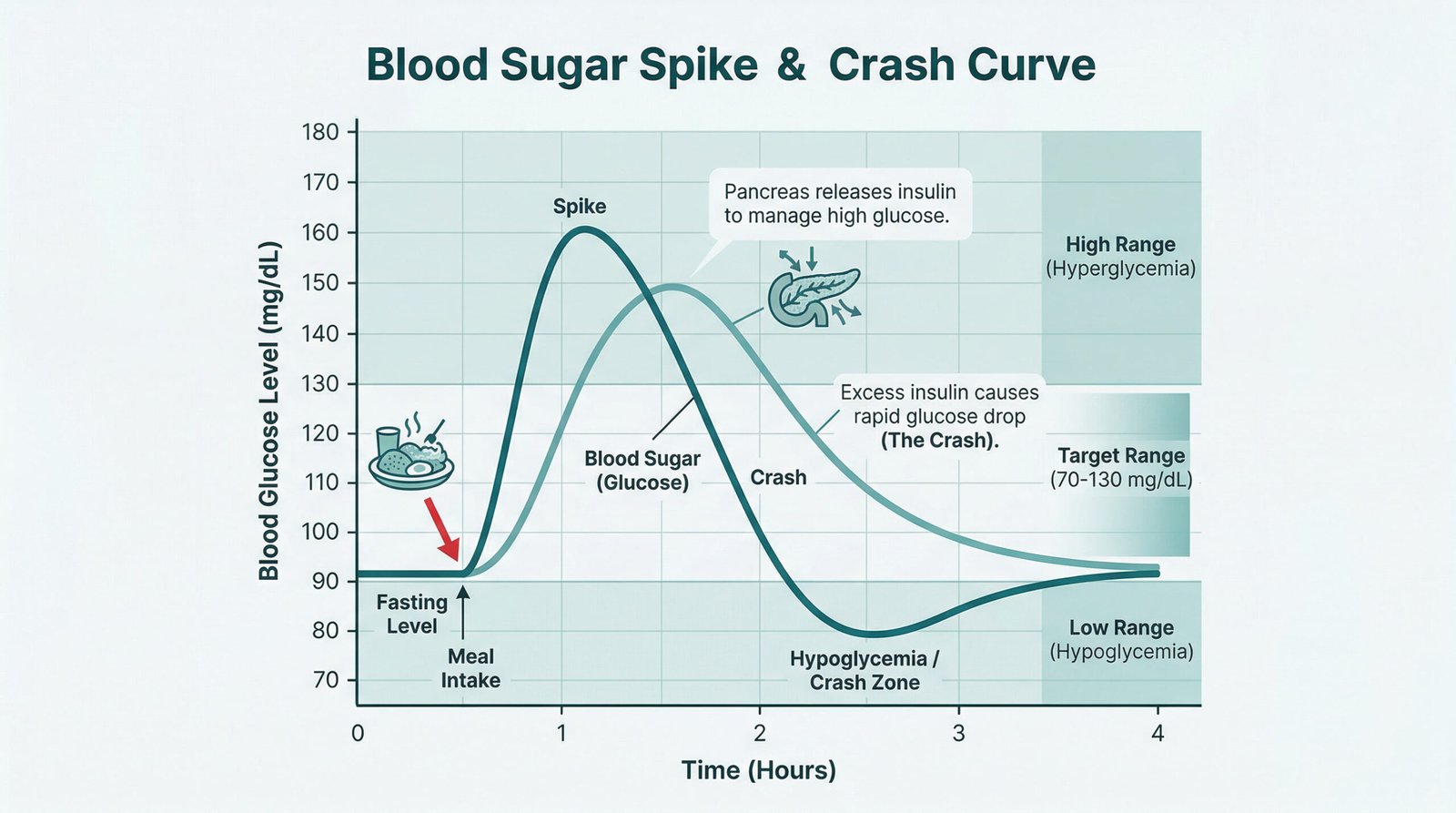
The Fix: 4 Habits That Flatten the Curve
None of these require you to count calories, eliminate carbs, or follow a specific diet. They work by slowing glucose absorption, reducing the size of spikes, and giving your body a steady fuel supply instead of a series of surges and crashes.
1. Always eat protein with your first meal of the day
Protein slows gastric emptying — the rate at which food leaves your stomach and glucose enters your bloodstream. Starting the day with a protein-first meal means your blood sugar rises gradually and stays elevated for 3 to 4 hours instead of spiking and crashing within 45 minutes. Two eggs with vegetables, Greek yogurt with nuts, or a protein shake with whole oats all do the job. The goal is at least 20 to 30 grams of protein before anything else.
Common mistake: eating fruit alone or toast alone for breakfast. Both are fast-digesting carbohydrates with no protein or fat to slow the glucose release — they trigger a spike almost immediately.
2. Add fibre, fat, or protein to every meal — never eat carbs alone
The order and combination of what you eat matters as much as what you eat. Fibre, fat, and protein all slow glucose absorption when eaten alongside carbohydrates. Eating vegetables before or with your starchy food, adding olive oil to your bread, or pairing fruit with a handful of nuts are all small interventions that flatten the blood sugar curve from that meal significantly.
Glucose researcher Jessie Inchaupe, whose work was published in Cell Metabolism, found that eating vegetables before carbohydrates reduced the subsequent glucose spike by up to 75% compared to eating the same foods in the reverse order. The food combination didn’t change — only the sequence.
Common mistake: drinking fruit juice with a meal. Juice delivers a concentrated glucose hit with no fibre, fat, or protein to buffer it — it’s one of the fastest ways to spike blood sugar even when paired with a balanced plate.
3. Take a 10-minute walk after eating
Muscle contractions during light movement consume glucose directly — without requiring insulin. A 10-minute walk after meals has been shown in multiple studies to reduce the post-meal glucose spike by 20 to 30% and to significantly accelerate the return to baseline. You don’t need to exercise hard. Walking to make a cup of tea, doing light stretches, or moving around the house is enough to engage the glucose uptake pathway in your muscles.
Common mistake: sitting at a desk or on the sofa immediately after eating. The post-meal period is the highest-spike window — it’s also the easiest window to blunt the spike with minimal effort.
4. Replace mid-afternoon snacks with protein or fat, not sugar
If you need a snack between meals, it should maintain blood sugar — not spike it. Anything that combines protein with fat (walnuts, a boiled egg, cheese, full-fat yogurt) gives your body a slow, stable fuel release. Anything primarily sugar or starch (biscuits, crisps, fruit juice, cereal bars) triggers a small spike, a small crash, and increased hunger an hour later. The goal of a snack is to extend stability, not to create another cycle.
Common mistake: choosing ‘healthy’ snack bars. Most contain enough added sugar or fast-digesting oats to spike blood sugar meaningfully. Check the sugar content before assuming it’s safe — anything over 8 to 10 grams of sugar per serving counts as a fast spike.
Abdellah’s Experience: What Changed for Me
At the warehouse, lunch was usually whatever was cheap and fast — a sandwich from the shop, sometimes just bread and processed meat, occasionally nothing at all. By 2pm I was completely gone. Not tired — gone. Standing up felt like effort.
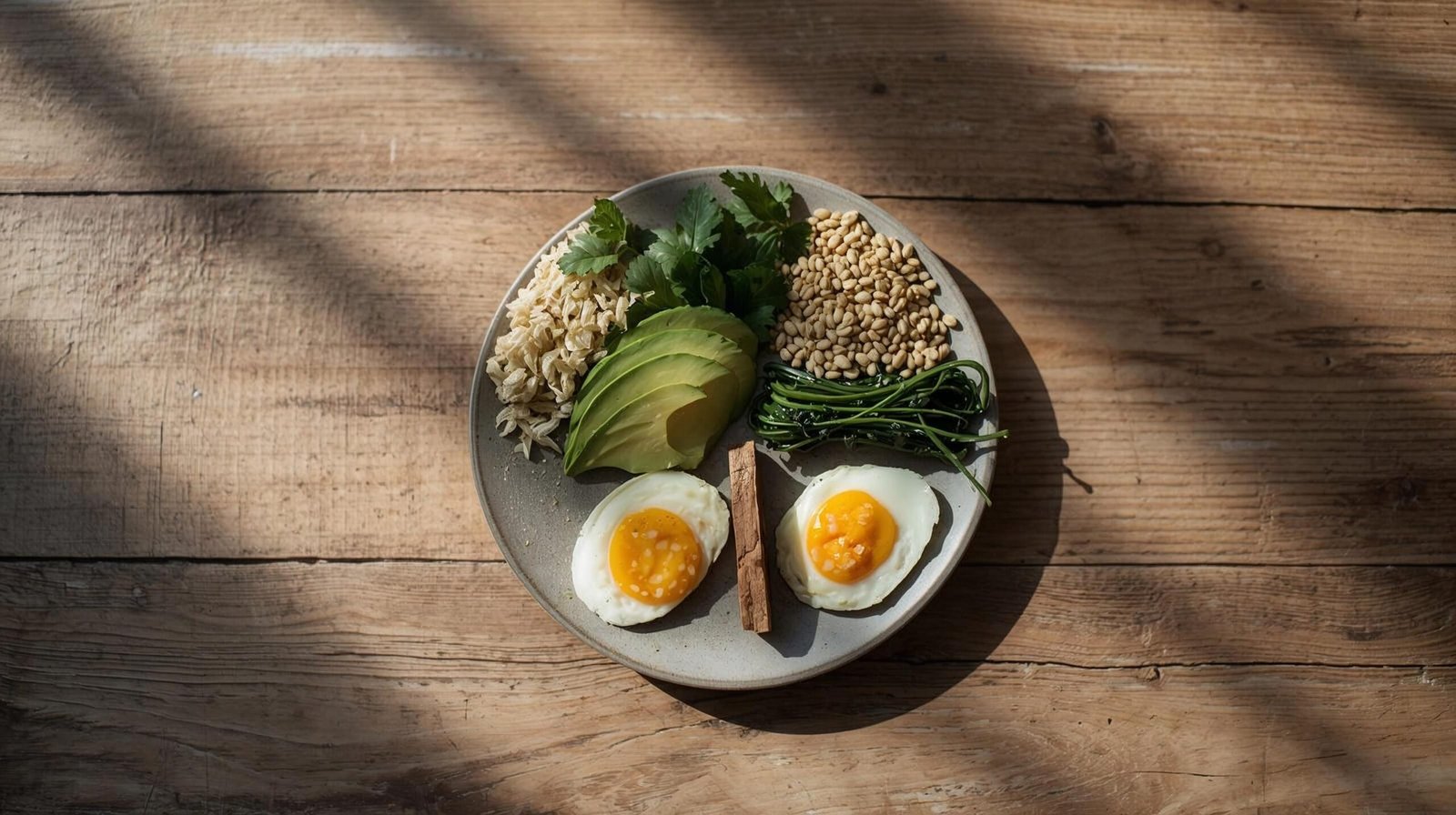
I started packing my own lunch: two boiled eggs, a handful of walnuts, some leftover vegetables. Nothing fancy. I also started eating the vegetables first before anything starchy, which I read about and tried mostly out of curiosity.
After 5 days, the 2pm crash had softened noticeably. After 2 weeks, it had almost completely disappeared. Same shift length, same physical load, same sleep. The only thing I changed was what and how I ate.
Your energy doesn’t crash because you work hard. It crashes because you’re fuelling it wrong.

Try This for 5 Days (Then Tell Me I’m Wrong)
Don’t overhaul your diet. Just apply these 4 rules consistently for one week:
- Breakfast: include at least 20g of protein — eggs, yogurt, or a protein source with oats
- Every meal: eat your vegetables or salad before the starchy portion
- After lunch: take a 10-minute walk, even just around the building or outside
- Afternoon snack (if needed): swap anything sweet for walnuts, a boiled egg, or full-fat yogurt
- Track your energy level at 2pm on Day 1 vs Day 5 — specifically your focus, irritability, and sugar cravings
Most people notice the afternoon wall softening within 3 days. The sugar cravings usually follow within the same window — because when blood sugar is stable, the craving signal stops firing.

The Real Reason Your Energy Crashes Has Nothing to Do with Willpower
The 2pm wall is not a sign you need more caffeine or a lighter workload. It’s a sign your blood glucose spiked hard a few hours earlier and has since bottomed out. Your brain is just doing its job — demanding fast fuel to recover.
Fix the spike, and the crash disappears. Fix the crash, and the craving disappears. It’s the same cycle running in reverse.
If you want to go deeper on the meal side, read: best foods to eat when chronically stressed — several of those foods also directly support blood sugar stability. And if poor sleep is compounding your energy problems, this connects directly with: why you feel tired every day even after rest.
Table of Contents
Medical disclaimer
This content is for informational purposes only and does not constitute medical advice. Always consult a qualified healthcare professional for personal health concerns.