

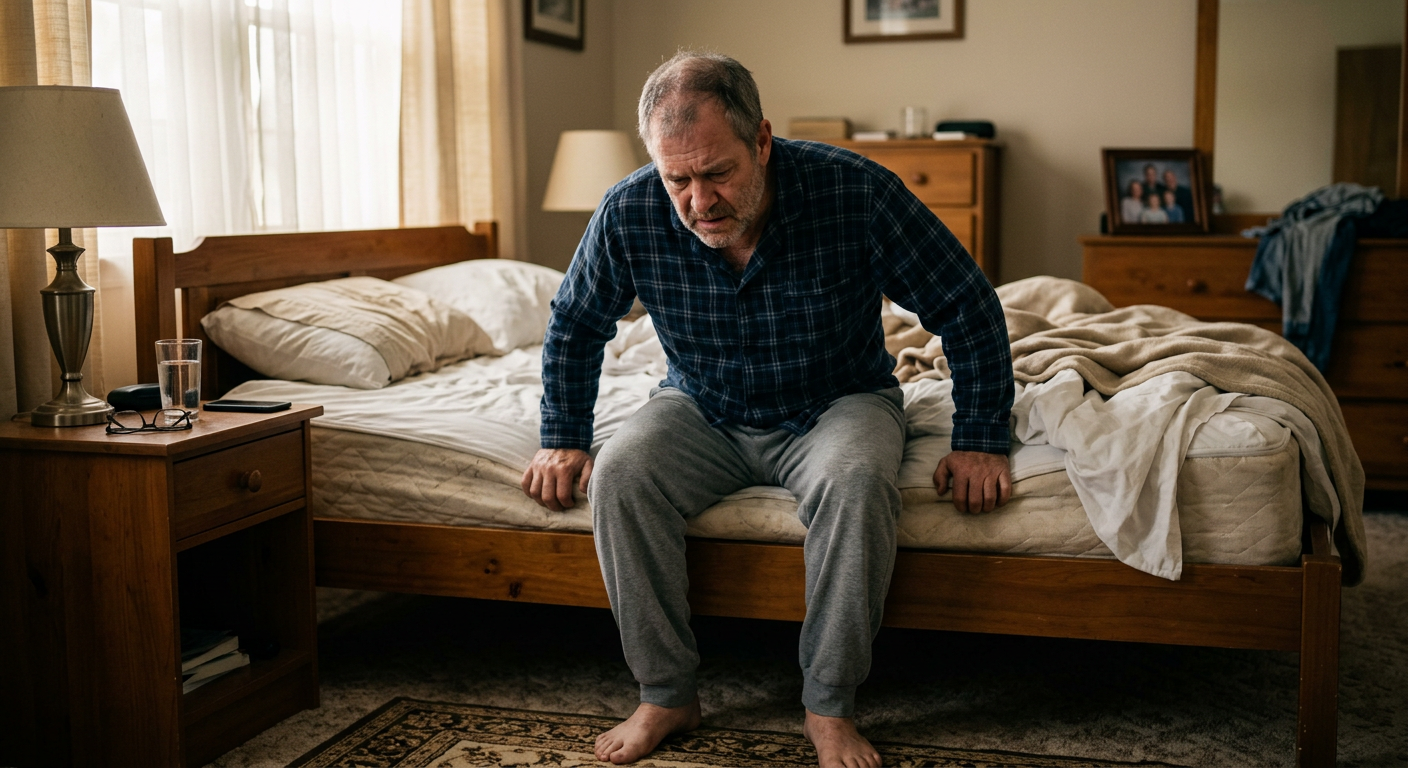

You think feeling weaker at 40 or 50 is just normal aging. But what if it’s actually a condition that doctors have a name for — one that quietly triples your risk of falls, metabolic disease, and early death, and starts as young as 30?
Most people have never heard of sarcopenia. They blame tiredness on stress, blame weight gain on diet, blame slow recovery on a bad night’s sleep. They don’t connect it to the slow, silent erosion of the muscle tissue their body has been losing for years.
Here’s the uncomfortable truth: after the age of 30, the average person loses 3–8% of their muscle mass every decade. After 60, that rate accelerates. And with muscle goes your metabolism, your energy, and more of your independence than most people realize. But this isn’t a death sentence. There are specific, well-researched habits that stop this process — even reverse it. And none of them require a gym membership or a complicated protocol.
Why So Many People Lose Muscle Without Knowing It
Sarcopenia is the progressive loss of skeletal muscle mass, strength, and function that occurs with aging. According to research published in The Journal of the American Medical Directors Association, the condition affects an estimated 10–16% of adults worldwide — but the real number is likely higher, because most people never get tested until something goes wrong.
The tricky part: it doesn’t feel dramatic. There’s no single morning where you wake up and think “I’ve lost muscle.” It sneaks up over years — through the slow accumulation of sedentary days, insufficient protein, and the hormonal shifts that come with age.
Sound familiar? Check how many of these apply to you:
- You get tired more easily doing things that used to feel effortless
- You’ve noticed your arms or legs looking less defined, even without losing weight
- Recovery after physical activity takes longer than it did a few years ago
- You feel physically weaker — opening jars, carrying bags, climbing stairs is harder
- Your weight has crept up even though your eating habits haven’t really changed
If three or more of those hit close to home, sarcopenia may already be happening. But the body is adaptive — and this is entirely fixable with the right inputs.

What’s Actually Happening Inside Your Body
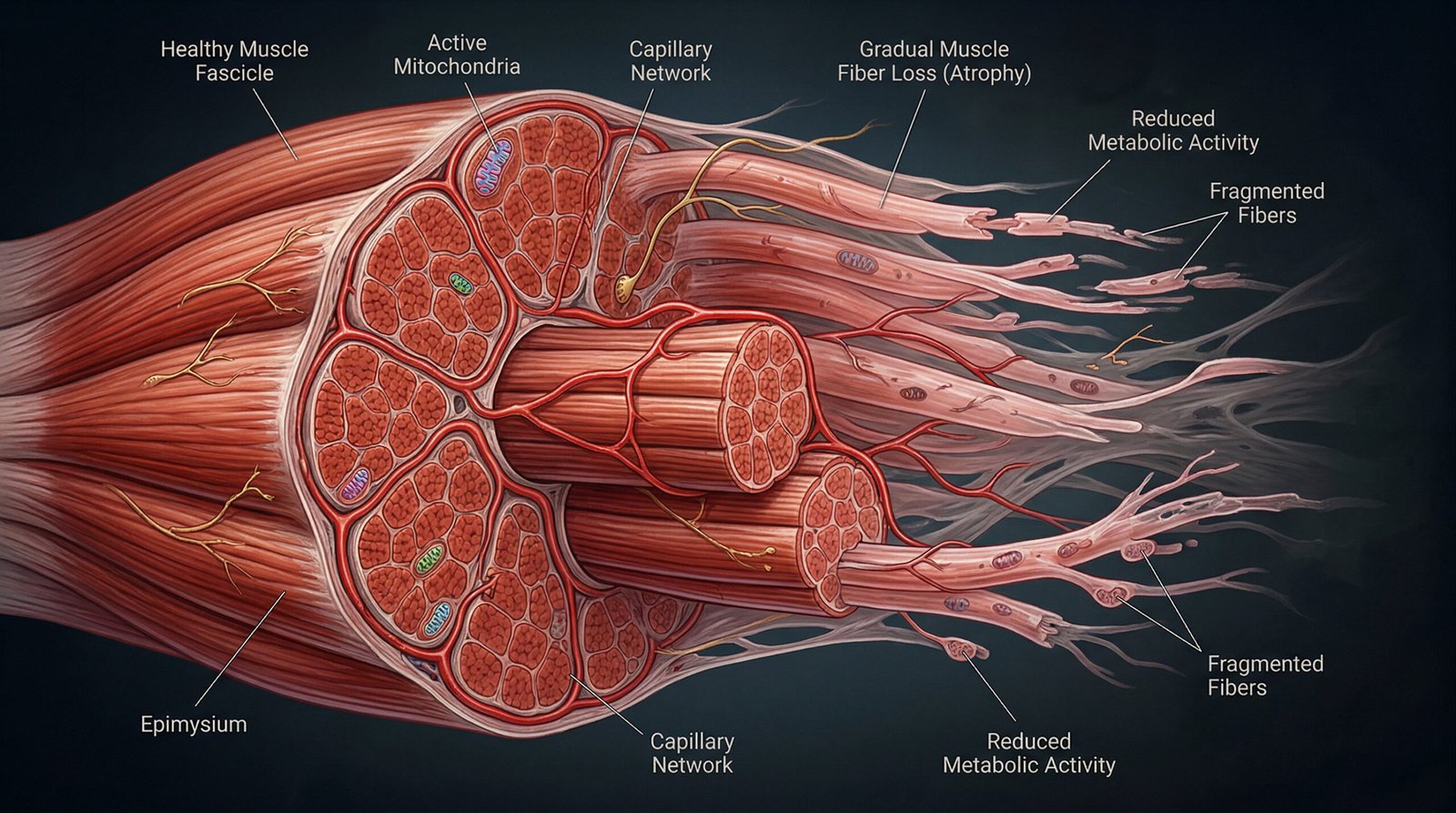
Your muscles aren’t just for lifting things. They’re metabolically active tissue — meaning they burn calories at rest, regulate blood sugar, store glycogen, and influence how your hormones behave. When you lose muscle, you don’t just get weaker. Your entire metabolic system shifts in a direction you don’t want.
Protein turnover falls out of balance
Your muscles are constantly breaking down and rebuilding — a process called protein turnover. In healthy young adults, synthesis and breakdown stay roughly in balance. But as you age, the anabolic signals that trigger muscle growth weaken. Your body still breaks down muscle tissue, but the signal to rebuild it becomes blunted. The result is a slow net loss — even if you’re eating the same food and doing the same activities you’ve always done.
This isn’t a willpower problem. It’s a biological shift that happens to every human body. The question is whether you give your body the inputs it needs to fight back.
Hormonal changes accelerate muscle breakdown
After 30, levels of anabolic hormones — testosterone, growth hormone, and IGF-1 — begin to decline. These are the hormones that tell your muscles to grow and repair. When they drop, the balance tips toward breakdown. A review in Nutrients (MDPI) confirmed that this hormonal decline is one of the primary drivers of sarcopenia, alongside reduced physical activity and inadequate dietary protein.
I’m not 100% sure why the hormonal decline hits some people harder than others — genetics likely play a role. But what’s clear is that lifestyle factors either accelerate or slow the process significantly.
Muscle loss reshapes your metabolism
Muscle is one of the most metabolically expensive tissues in your body. It accounts for up to 40% of your resting metabolic rate. When you lose muscle, your body burns fewer calories at rest — which means fat accumulates faster even without overeating. This creates a frustrating cycle: less muscle → slower metabolism → more fat → more inflammation → which accelerates further muscle loss. It’s the snowball effect most people notice as “I can’t eat the way I used to without gaining weight.
The Fix: 5 Habits That Stop Muscle Loss
You don’t need a complicated program. You need consistent inputs that shift the balance back toward muscle synthesis. These five habits do exactly that.
1. Hit your protein target every single day
The current recommended daily intake of 0.8g of protein per kg of body weight was set for general health — not for preventing sarcopenia. For that, research suggests you need 1.2–1.6g of protein per kg of body weight daily. For a 75kg person, that’s roughly 90–120g of protein per day.
Spread it across meals — aim for 30–40g per meal rather than trying to hit it all at dinner. Eggs, chicken, Greek yogurt, legumes, and fish are the most reliable sources.
Common mistake: eating enough total calories but underestimating protein. You can be overfed and still be protein-deficient.
2. Do resistance training at least twice a week
Lifting weights — or doing any resistance-based movement — is the single most direct signal you can send your body to build and preserve muscle. You don’t need heavy weights or a gym. Bodyweight squats, push-ups, resistance bands, and loaded carries all count.
The key variable is progressive overload: gradually making the exercise slightly harder over time. This keeps the stimulus fresh and prevents the plateau most people hit after a few months.
Common mistake: only doing cardio. Cardio is valuable, but it doesn’t provide the mechanical tension that stimulates muscle protein synthesis. Both are needed.
3. Don’t skip meals — especially breakfast
Muscle protein synthesis requires a steady supply of amino acids throughout the day. Fasting for long stretches or skipping breakfast means your body goes without raw materials for repair for extended periods — which tilts the balance toward breakdown.
This doesn’t mean you need to eat constantly. But consistent meal timing — with protein at every meal — keeps synthesis rates higher than sporadic or skipped eating patterns.
Common mistake: thinking that skipping meals will help lose fat. It might, short-term — but at the cost of accelerating the muscle loss you’re trying to stop.
4. Prioritize sleep — seriously
Most muscle repair and growth hormone release happens during deep sleep. Cutting sleep short doesn’t just leave you tired — it actively suppresses the anabolic hormones your muscles depend on to rebuild. Consistently sleeping less than 7 hours raises cortisol, which directly promotes muscle breakdown.
If your sleep quality is poor, that’s worth fixing before anything else. Read: how to sleep better naturally — it covers exactly this.
Common mistake: prioritizing training over sleep. If you’re training hard and sleeping badly, sleep is the variable to fix first.
5. Stay active throughout the day — not just during workouts
NEAT — non-exercise activity thermogenesis — is all the movement you do outside of formal exercise. Walking, standing, carrying things, taking stairs. Research shows that declining NEAT levels are one of the main reasons sarcopenia accelerates in sedentary office workers and retired individuals.
You don’t need to count steps obsessively. But a rough target of 7,000–8,000 steps per day — combined with resistance training — creates a consistently muscle-preserving environment inside your body.
Common mistake: sitting all day and then doing one intense workout. Activity needs to be distributed through the day to keep muscle tissue in a net-positive state.

Abdellah’s Experience: When I Realized Something Was Wrong
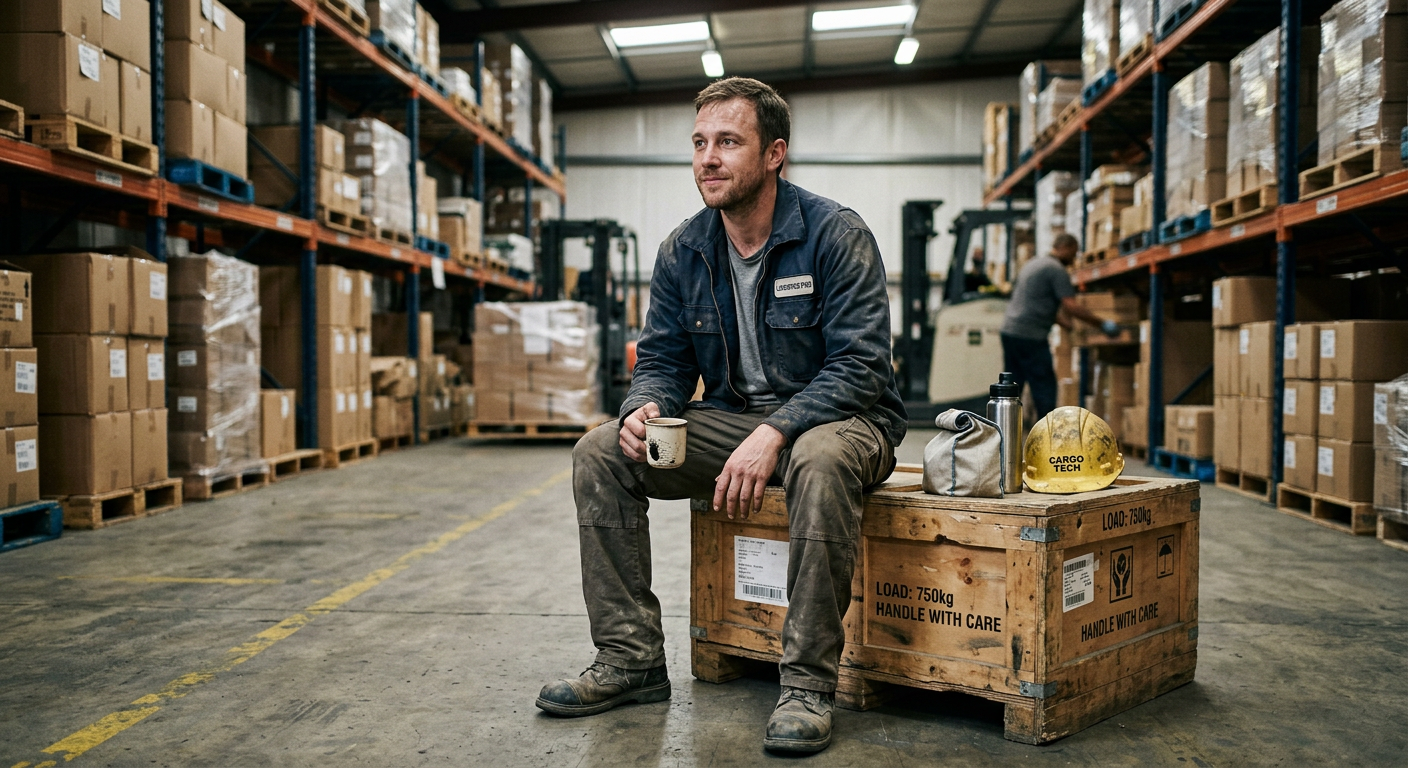
I started noticing it during a stretch of warehouse shifts that should’ve felt routine. Same routes, same loads. But I was getting more tired, not less. My arms felt weaker at the end of the day. I put it down to bad sleep and a rough season at work.
Then I started tracking my protein for two weeks and realized I was averaging around 50g a day on a 75kg frame. Half of what I needed. I added eggs at breakfast, a Greek yogurt in the afternoon, and some resistance band work three evenings a week. Nothing dramatic.
After four weeks I noticed the difference. Not just in how I looked — in how long I could last without hitting the wall. Recovery was faster. The weakness I’d started to accept as normal turned out to be completely reversible.
The body doesn’t lie — it tells you what it’s missing. You just have to know how to listen.
Try This for 7 Days (Then Tell Me I’m Wrong)
Don’t overhaul your entire life. Just add these five inputs for one week and track how your body responds.
- Protein target: hit 1.2g per kg of your body weight every day — spread across at least 3 meals
- Resistance session: do 2 bodyweight resistance sessions — squats, push-ups, lunges, rows. 3 sets of 10 each is enough
- No skipped breakfasts: eat protein within 1 hour of waking up — eggs, yogurt, or a protein-rich smoothie
- Sleep 7+ hours: protect this like your recovery depends on it — because it does
- Move through the day: aim for 7,000 steps minimum — take the stairs, walk during breaks, stand when you can
Compare how you feel on Day 1 vs Day 7. Most people are surprised by how much a single week of consistent inputs shifts energy and strength — because they’ve been running on a deficit for a long time without realizing it.

The Real Reason You Feel Weaker Has Nothing to Do With Age
Sarcopenia isn’t an inevitable part of getting older. It’s what happens when the body doesn’t get the inputs it needs — enough protein, enough physical challenge, enough sleep — for long enough that the damage becomes visible.
Most people discover this too late and spend years trying to recover what they quietly lost. You don’t have to be one of them.
And if low energy is part of the picture, this connects directly with how your cells produce fuel — read: why you feel tired every day — fatigue and daily energy habits to see the full picture.
Table of Contents
Medical disclaimer
This content is for informational purposes only and does not constitute medical advice. Always consult a qualified healthcare professional for personal health concerns.