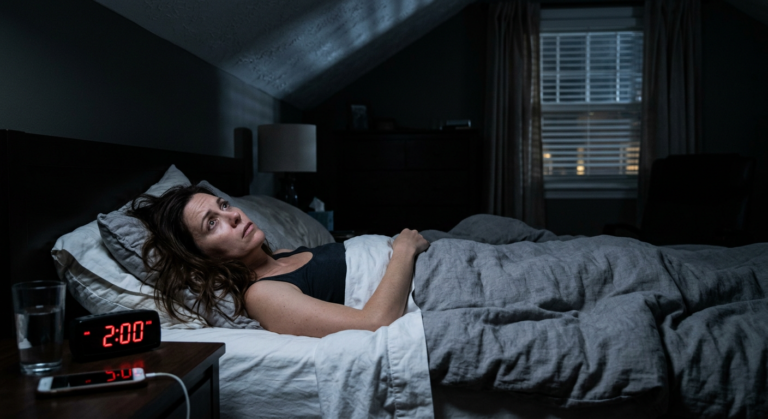


8 hours in bed. Alarm goes off. You feel worse than when you got in.
This is one of the most frustrating things a person can experience — and most people blame it on stress, age, or just ‘being that way’. But there’s a more precise explanation. Not all sleep is equal. And the type of sleep most people are consistently missing — deep sleep, also called slow-wave sleep — is the only stage where your body actually repairs itself, consolidates memory, and restores the energy systems that make you feel human the next day.
You can spend 8 hours in bed and get almost none of it. And unless you understand what’s blocking it, nothing you try will fully work.
Why So Many People Sleep Long But Recover Poorly
According to research from the University of California, Berkeley, most adults in the modern world are chronically sleep-deprived not in total hours, but in sleep quality — particularly in the proportion of deep, slow-wave sleep they’re actually getting. External factors like artificial light exposure, alcohol, inconsistent sleep schedules, and high evening cortisol are systematically stripping the most restorative sleep stages from people who think they’re sleeping fine.
The problem isn’t time in bed. It’s architecture — the internal structure of your sleep. And modern life is dismantling that architecture night by night without most people noticing.
Here’s what chronically poor deep sleep actually looks and feels like:
- Waking up unrefreshed even after 7 to 9 hours of sleep — consistently
- Needing an alarm every morning and never waking naturally before it
- Feeling mentally sharp for only 2 to 3 hours before cognitive fatigue sets in
- Muscle soreness or physical heaviness that doesn’t resolve overnight
- Frequent night wakings or very vivid, active dreams with no deep rest feeling
- Immune system issues — getting sick more often than you used to
If 3 or more of those apply to you most mornings, your sleep architecture is almost certainly compromised — and the deep sleep stage is the first casualty. But it’s also the one most responsive to the right interventions.

What’s Actually Happening Inside Your Body
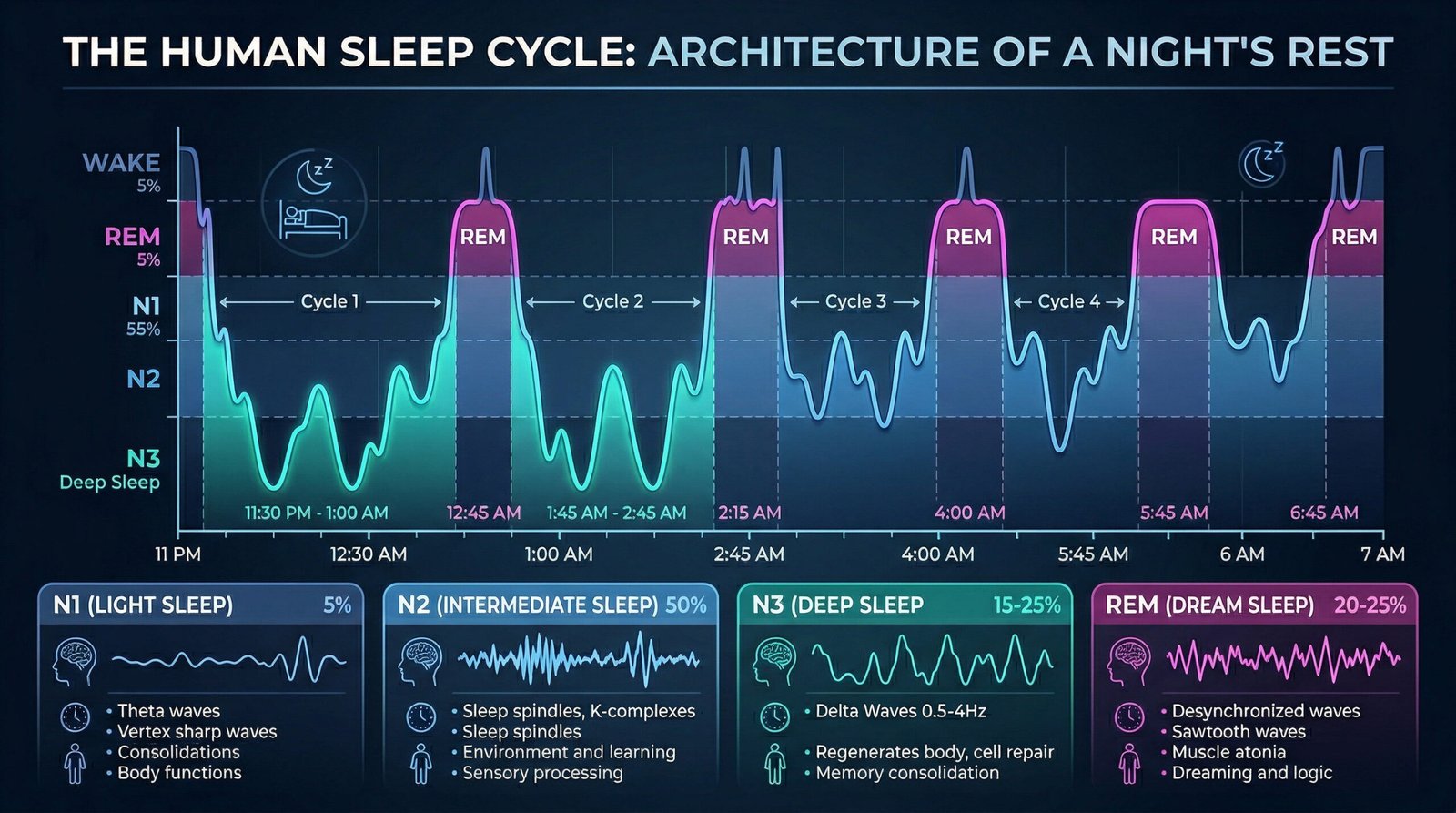
Sleep isn’t a single uniform state. Your brain cycles through distinct stages roughly every 90 minutes throughout the night — and each stage serves a different biological function. Understanding the architecture is what makes the interventions make sense.
Deep sleep is when your body does its actual repair work
Slow-wave sleep — stages N2 and N3 of NREM sleep — is the deepest and most physically restorative phase of the sleep cycle. During this stage, your brain produces its largest pulses of growth hormone, which drives cellular repair, muscle recovery, immune function, and metabolic regulation. Your body temperature drops, your heart rate slows to its lowest point, and your brain produces slow, synchronized delta waves that are fundamentally different from any waking state.
This is also when your glymphatic system activates — a waste-clearance system in your brain that flushes metabolic byproducts including amyloid-beta, a protein linked to neurodegeneration. According to a landmark study in Science, the glymphatic system is nearly 10 times more active during deep sleep than when you’re awake. You don’t just feel better after deep sleep. Your brain is literally cleaner.
The things destroying your deep sleep aren’t obvious
Deep sleep is concentrated in the first half of the night — typically in the first 2 sleep cycles, before midnight for most people. This means that anything disrupting your first few hours of sleep disproportionately destroys your deep sleep budget for the entire night.
The three biggest suppressors of deep sleep are: alcohol (which fragments slow-wave sleep even in small amounts), artificial blue light in the 2 to 3 hours before bed (which suppresses melatonin and delays sleep onset), and inconsistent sleep timing (which disrupts the circadian alignment that triggers deep sleep initiation). Most people are doing at least two of these three things every night without realising the impact.
Adenosine build-up is your deepest driver of deep sleep — and you can manage it
Adenosine — the sleep-pressure molecule that accumulates throughout the day — is the primary driver of how deep your sleep goes. The longer and more continuously you’ve been awake, the more adenosine you’ve accumulated, and the deeper your sleep will be. This is why napping too late in the day, sleeping in at weekends, or lying in bed for extended periods while awake all reduce your deep sleep depth — they either blunt or misalign the adenosine pressure that would otherwise drive you into slow-wave sleep.
I’m not 100% sure the full interaction between adenosine and deep sleep is completely mapped by the research yet — but the practical implications of managing it are well-supported and genuinely effective.
The Fix: 4 Habits That Increase Deep Sleep Quality
None of these require supplements, gadgets, or an overhaul of your lifestyle. Each one directly addresses one of the main mechanisms that suppress or enhance slow-wave sleep. Apply them consistently and the results tend to show up within 5 to 7 days.
1. Fix your sleep and wake time — both matter equally
Your circadian rhythm is a 24-hour biological clock that determines when your brain initiates each sleep stage. Deep sleep is most reliably triggered when sleep onset aligns with your chronotype — your natural sleep timing preference. Going to bed and waking at inconsistent times disrupts this alignment. Even a 60-minute shift across the week fragments deep sleep significantly.
Set a fixed wake time — including weekends. This single change anchors your circadian rhythm more powerfully than any other intervention. Your bedtime will naturally regulate within 1 to 2 weeks once your wake time is locked.
Common mistake: sleeping in at weekends to ‘catch up’. Social jetlag — the mismatch between weekday and weekend sleep timing — has been shown to reduce deep sleep quality for the entire following week, not just the night after.
2. Stop all screens 60 to 90 minutes before bed
The blue-light wavelengths emitted by phones, laptops, and televisions are detected by intrinsically photosensitive retinal ganglion cells in your eyes — which signal your suprachiasmatic nucleus to suppress melatonin production. Melatonin doesn’t cause sleep, but it signals the timing of sleep onset to your circadian system. Suppress it for long enough in the evening and your deep sleep initiation is delayed — even if you fall asleep at your normal time.
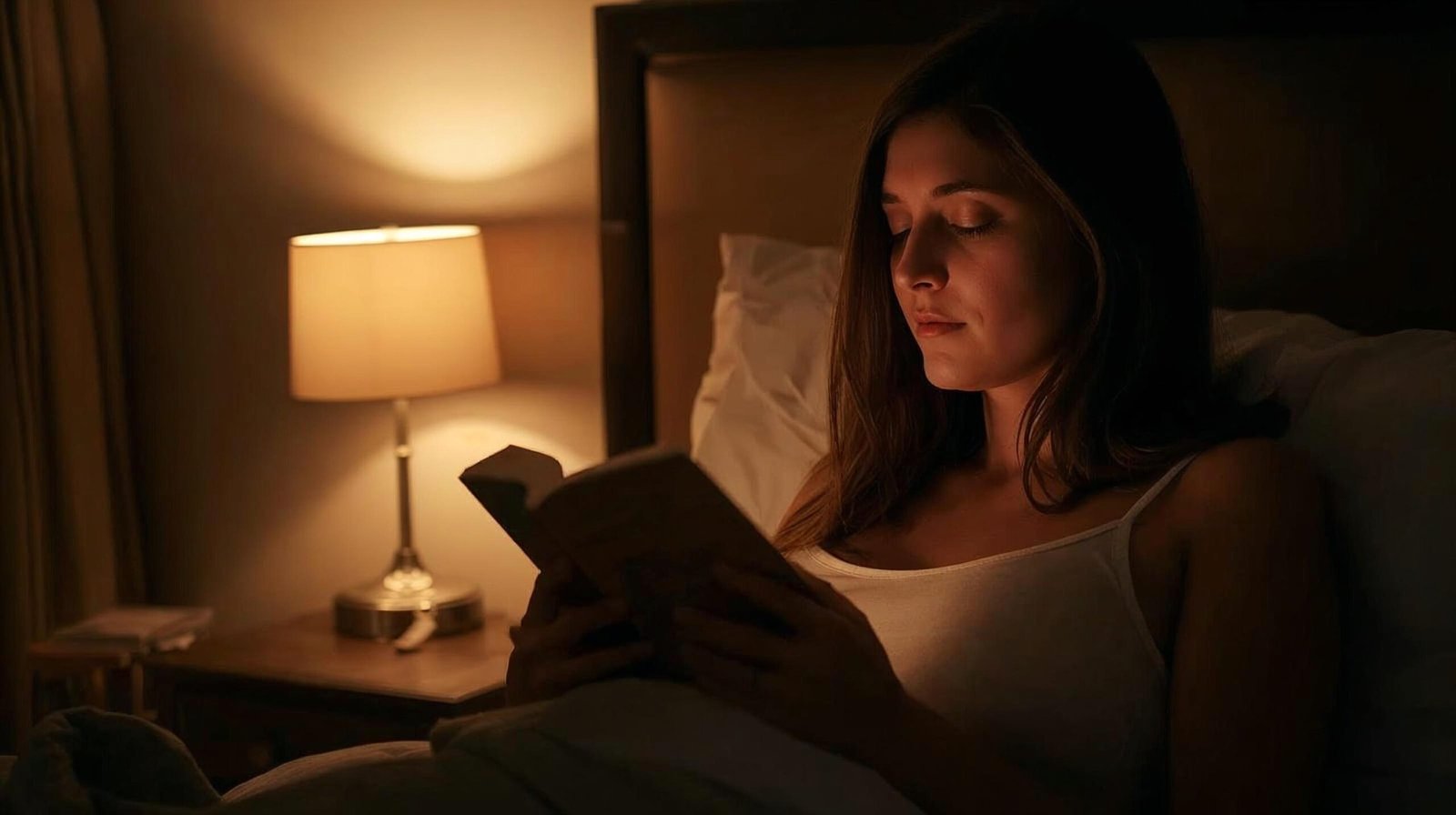
Replace screens with low-light activities: reading a physical book under a warm-toned lamp, light stretching, or conversation. The goal isn’t to be boring — it’s to stop sending your brain a signal that it’s still mid-afternoon.
Common mistake: using blue-light glasses as a full substitute. They help marginally, but they don’t replicate the effect of simply removing bright light stimulation from the environment in the pre-sleep window.
3. Keep your bedroom cold — around 18 to 19 degrees Celsius
Your core body temperature needs to drop by approximately 1 to 2 degrees Celsius to initiate and maintain deep sleep. This is a hard biological requirement — not a preference. A bedroom that’s too warm (above 21 degrees) directly impairs the thermoregulatory drop that triggers slow-wave sleep onset. Sleep researcher Matthew Walker’s research at the Center for Human Sleep Science found that ambient temperature is one of the most powerful controllable variables for deep sleep depth.
If you can’t control your room temperature, a warm shower or bath 60 to 90 minutes before bed creates a paradoxical effect: the post-bath heat dissipation accelerates the core temperature drop that deep sleep requires. It’s one of the most underused sleep tools available.
Common mistake: wearing heavy sleepwear or using very thick duvets in an attempt to feel cosy. Thermal comfort and deep sleep are not the same thing — if your body can’t shed heat, your deep sleep suffers regardless of how comfortable you feel.
4. Cut alcohol completely in the 3 hours before sleep
Alcohol is sedating — which is why so many people use it to fall asleep faster. But sedation is not sleep. Alcohol actively suppresses REM sleep and fragments slow-wave sleep through the second half of the night. Even 2 drinks in the evening have been shown in multiple studies to reduce deep sleep by up to 20%, increase night wakings, and reduce the restorative value of the sleep you do get.
You might fall asleep faster and feel deeply unconscious — but your brain’s electrophysiology tells a completely different story. The delta waves of true deep sleep are disrupted by alcohol’s metabolite acetaldehyde in ways that no amount of extra time in bed can compensate for.
Common mistake: assuming that because you sleep through the night after drinking, the alcohol isn’t affecting you. Night waking is just one measure. Deep sleep suppression happens even when you don’t wake up at all.
Abdellah’s Experience: What Changed for Me
After warehouse shifts, I’d come home wired, eat late, scroll my phone until 1am, and then wonder why 8 hours of sleep left me feeling like I hadn’t slept at all. I thought I just needed more hours. I kept adding time and getting the same result.
I made 3 changes in one week: fixed my wake time at 6:30am regardless of the night before, put my phone in the kitchen after 10pm, and dropped the room temperature by opening the window before bed. That was it.
By Night 4 I was waking up before my alarm for the first time in years. Not groggy. Actually awake. The difference wasn’t subtle — it felt like a different quality of consciousness in the morning compared to what I’d been accepting as normal.
More hours in bed wasn’t the answer. The right conditions inside those hours was.

Try This for 7 Days (Then Tell Me I’m Wrong)
Apply all four changes for one full week — no partial attempts:
- Set a fixed wake time and hold it every day including weekends — pick a time and don’t move it
- No screens from 60 minutes before your target bedtime — phone in another room
- Open a window or lower the thermostat to bring your room to around 18 to 19 degrees before sleep
- No alcohol in the 3 hours before bed — if you drink, move it earlier in the evening
- On Day 1 and Day 7, note: how you feel at the moment of waking, whether you woke before your alarm, and your sharpness in the first hour of the morning
Most people notice a difference by Night 3 to 4 — specifically a heavier, more restorative feeling during the night and a cleaner mental state on waking. Give it the full 7 days. Sleep architecture takes a few nights to adjust.

The Real Reason You Wake Up Tired Has Nothing to Do with How Long You Sleep
Hours in bed is the wrong metric. Most people who struggle with sleep quality are already sleeping long enough. What they’re missing is the depth — and depth is determined by the conditions you create, not the number of hours you log.
Get the temperature right. Remove the light. Lock the timing. Eliminate the alcohol. Those four variables control more of your deep sleep than anything else — and all four are completely within your control tonight.
If you want to go deeper on the recovery side of this, read: why you feel tired every day even after rest — it covers the daytime habits that compound sleep quality. And if blood sugar swings are waking you at night, connect this with: how to stop blood sugar crashes.
Table of Contents
Medical disclaimer
This content is for informational purposes only and does not constitute medical advice. Always consult a qualified healthcare professional for personal health concerns.