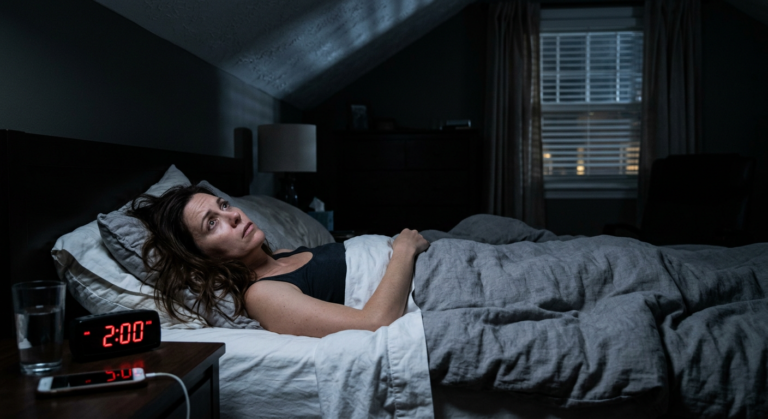

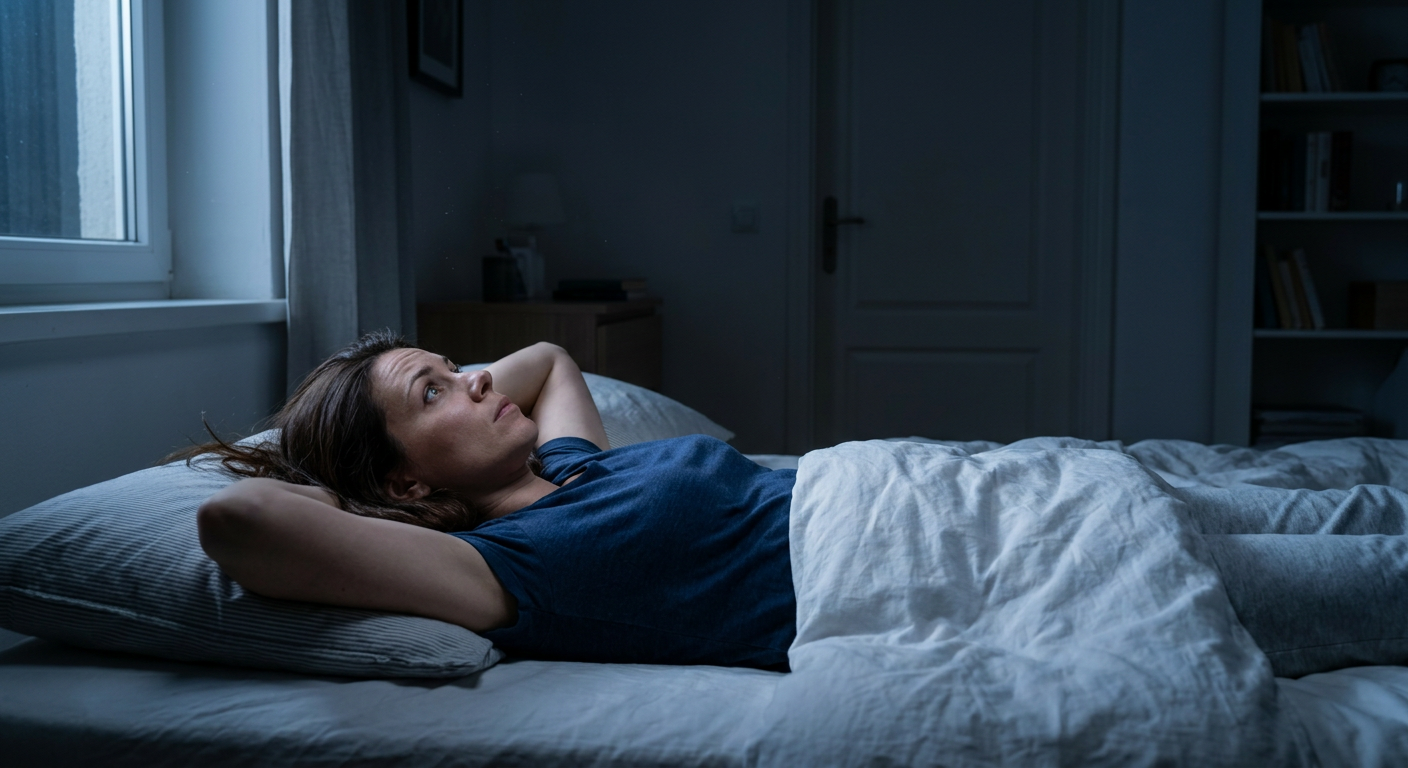

You think you just need a better mattress. Or an earlier bedtime. Or maybe that one supplement everyone keeps recommending.
But what if none of those things are the real problem? Millions of people try every sleep tip on the internet and still lie awake at 2am, staring at the ceiling, wondering why their body won’t just switch off.
The issue isn’t the mattress. And it’s probably not your schedule. It’s what you’re doing — and not doing — in the hours before bed. This article breaks down exactly why your brain resists sleep and the 5 habits that change it.
Why So Many People Can’t Sleep Naturally
Sleep problems are more widespread than most people admit. According to research published in Sleep Medicine Reviews, roughly 30% of adults experience regular insomnia symptoms — and many more struggle with poor sleep quality without meeting the clinical definition.
But here’s what’s uncomfortable: most sleep problems aren’t medical conditions. They’re habit problems. And they’re fixable without a prescription.
Check how many of these match your nights:
- Lying in bed for 30+ minutes, brain still running at full speed
- Waking up at 3am for no clear reason, unable to fall back asleep
- Feeling tired all day but suddenly alert the moment you try to sleep
- Depending on alcohol or melatonin supplements just to feel sleepy
- Waking up exhausted even after 7-8 hours in bed
If 3 or more of those hit close to home, the good news is this is fixable. And it’s not as complicated as the sleep industry wants you to believe.
What’s Actually Happening Inside Your Body
Sleep isn’t just something that happens when you lie down. Your body has to build up the conditions for sleep throughout the entire day — and modern habits actively work against that process.
Your circadian rhythm is getting disrupted
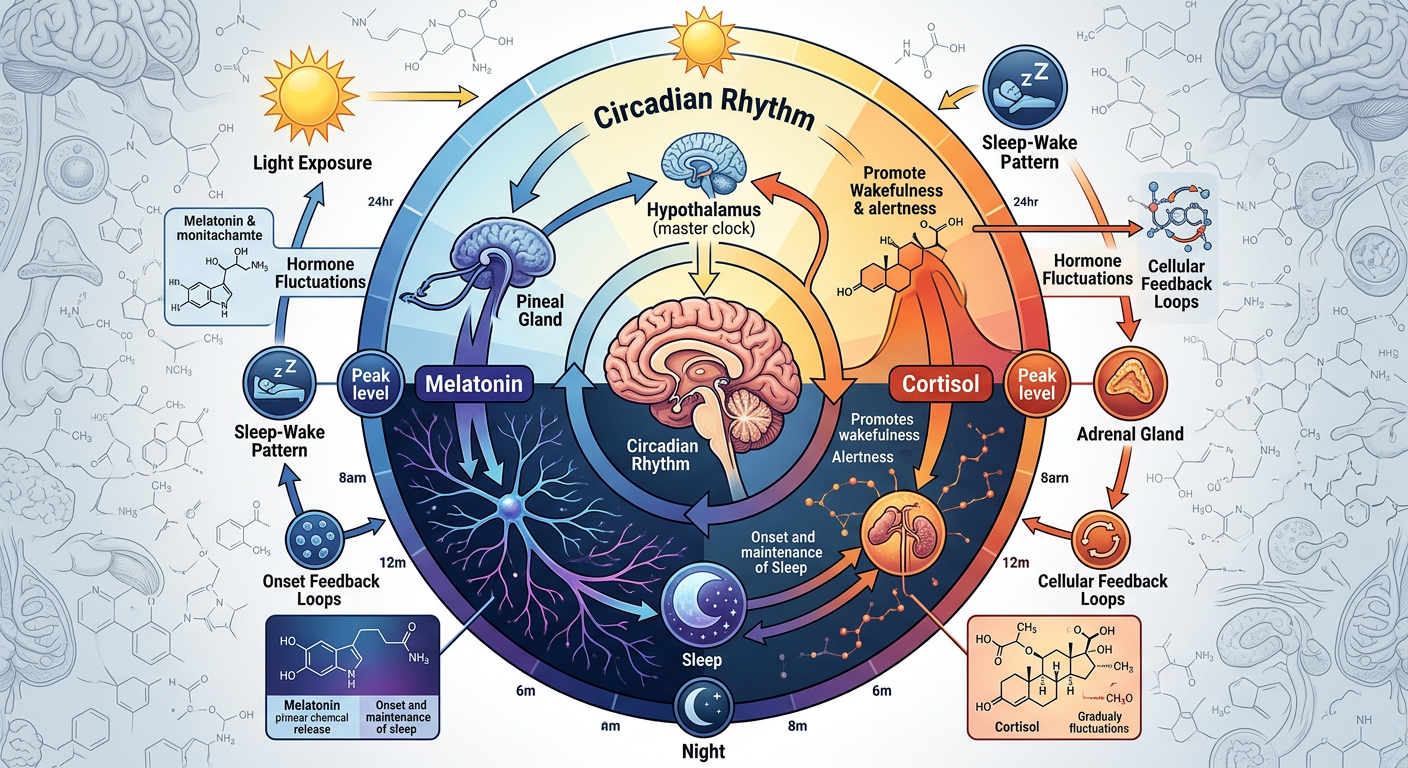
Your body runs on a 24-hour internal clock called the circadian rhythm. It controls when you feel alert and when you feel sleepy, largely through two hormones: cortisol (wakefulness) and melatonin (sleep onset).
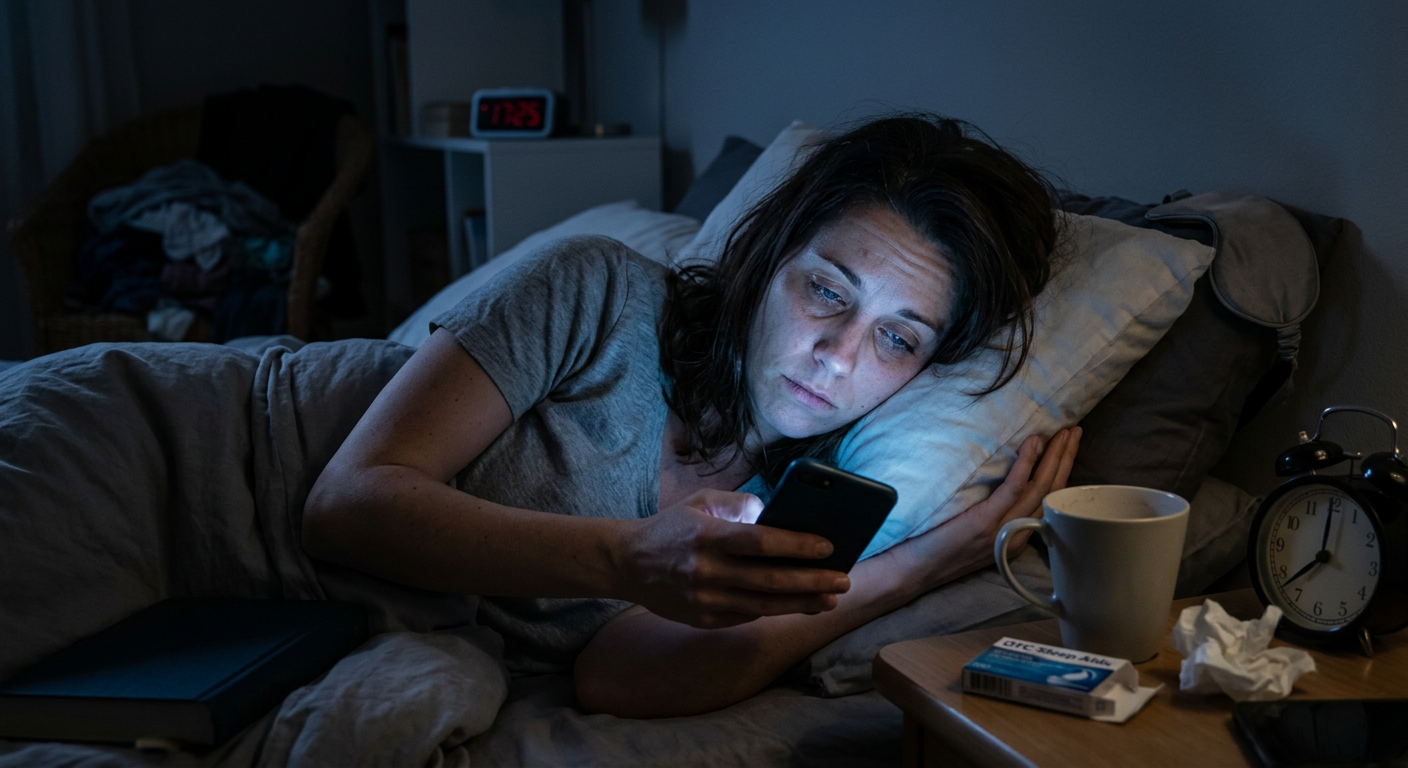
Light is the main trigger. When your eyes detect bright or blue-spectrum light — from screens, overhead LEDs, or even bright lamps — your brain suppresses melatonin and stays in daytime mode. This is why scrolling your phone at 10pm keeps you wired until midnight.
A study published on PubMed (pubmed.ncbi.nlm.nih.gov/26119832) found that evening blue light exposure delays melatonin onset by up to 3 hours. Three hours.
Your nervous system doesn’t know it’s safe to rest
Stress and unprocessed mental load keep your sympathetic nervous system (the fight-or-flight side) switched on. When cortisol stays elevated into the evening, your brain physically can’t transition into the parasympathetic state it needs for deep sleep.
This is why you feel exhausted but wired. Your body is tired — but it thinks there’s still a threat to manage. Emails, unfinished tasks, arguments you’re replaying — they all read as active threats to your nervous system.
Your sleep pressure isn’t building properly
Throughout the day, your brain accumulates a chemical called adenosine — this is what creates the pressure to sleep. But two things drain that pressure: napping too late in the day and drinking caffeine past 2pm.
Caffeine doesn’t give you energy — it blocks adenosine receptors so you can’t feel the tiredness that’s already built up. When the caffeine clears (usually 6-8 hours later), the blocked adenosine floods back in. But by then, your timing is off.
The Fix: 5 Habits That Actually Work
These aren’t tricks. They’re inputs your body needs to do what it’s already designed to do.
1. Cut all screens 60 minutes before bed
This one gets mocked a lot. But the biology doesn’t care what you think about it. Sixty minutes without blue light lets melatonin production begin on schedule and your brain temperature start to drop — both critical for sleep onset.
Common mistake: switching to “night mode” on your phone and thinking that’s enough. It reduces some blue light, but the mental stimulation of scrolling still keeps your cortisol elevated. The screen has to go away.
2. Keep your room cold and completely dark
Your core body temperature needs to drop by about 1-2 degrees Celsius to initiate deep sleep. A warm room fights that process the entire night. Aim for 16-19°C (60-67°F) — most people sleep much too warm.
Complete darkness matters too. Even small amounts of light (a phone charging LED, streetlights through thin curtains) reduce melatonin production. Blackout curtains or a sleep mask make a measurable difference.
Common mistake: cranking the heating before bed because you feel cold. You’ll fall asleep faster in a cold room under a warm blanket than in a warm room under a light sheet.
3. Cut caffeine after 1pm
Caffeine has a half-life of roughly 5-7 hours. That 3pm coffee still has half its caffeine circulating at 9pm — blocking the adenosine buildup your body needs to feel sleepy at midnight. I know, this one is annoying. But it works.
Common mistake: switching to “half-caff” or decaf but still drinking it late. Decaf isn’t caffeine-free — it still contains 15-30mg per cup.
4. Build a 20-minute wind-down routine
Your brain doesn’t switch from “full speed” to “asleep” instantly. It needs a transition. A short, consistent routine signals that the active part of the day is done — dim lights, something low-stimulation (reading a physical book, gentle stretching, making herbal tea), same order every night.
Honestly, this one surprised me the most. The routine itself matters less than the consistency. Your brain learns to associate those specific actions with sleep onset. Within 1-2 weeks, you’ll start feeling drowsy as soon as the routine begins.
5. Get outside light within 30 minutes of waking up
This is the most underrated sleep habit — and it’s about the morning, not the night. Morning sunlight anchors your circadian clock for the entire day. It tells your brain when “daytime” started, which sets exactly when melatonin production will begin 14-16 hours later.
Five to ten minutes outside, no sunglasses, as close to waking as possible. It doesn’t have to be sunny — even overcast outdoor light is 10x brighter than indoor lighting.
Common mistake: doing this through a window. Glass filters out most of the light spectrum your circadian system uses. You need to go outside.

Abdellah’s Experience: What Changed for Me
I used to finish late warehouse shifts completely wired. Physically exhausted but mentally spinning — replaying every small thing that happened, half-scrolling my phone, half-watching something on my laptop. I thought I just needed more hours in bed.
Then I made two changes: phone off at 9:30pm no matter what, and a 10-minute walk outside every morning right after waking. That’s it. No supplements, no new mattress, no fancy routine.
After five days, I wasn’t lying awake for an hour before falling asleep anymore. After two weeks, I stopped needing an alarm — I was just waking up when my body was ready. I’m not 100% sure the morning light alone accounts for all of it, but the timing was too specific to be coincidence.I’d been fighting my body for years. Turns out it just needed the right signal to switch off.

Try This for 7 Days (Then Tell Me I’m Wrong)
Don’t change everything. Just add these four things for one week:
- No screens 60 minutes before your target sleep time
- Cool your room to 16-19°C before bed
- No caffeine after 1pm
- Get outside within 30 minutes of waking — 5-10 minutes minimum
Track how you feel on Day 1 vs Day 7. Most people notice a difference by Day 3 — not because these habits are magic, but because they stop actively working against the sleep system that’s already built into your body.

The Real Reason You’re Still Not Sleeping
It’s not insomnia. It’s not your genetics. And it’s definitely not that you “just don’t need much sleep.” Most chronic poor sleep is a collection of small daily inputs working against your body’s natural system — the same system that got humans through 300,000 years without a single melatonin supplement.
Stop fighting your biology and start supporting it. The solution is boring on purpose — because boring is what works.
Want to build on this? Read: Why You Feel Tired Every Day (Even After Rest) — it covers the daytime side of the same system.
📘 Go Deeper — Related Guide
How to Sleep Better Naturally (Without Medication)
You are not an insomniac. Your biology has lost its signal. This guide explains the science behind your sleep architecture, your circadian clock, and the exact rules that determine whether you fall asleep in 10 minutes or 45. Then gives you the step-by-step 21-day protocol to fix it — no medication, no dependency, no expensive devices required.
Table of Contents
Medical Disclaimer
This content is for informational purposes only and does not constitute medical advice. Always consult a qualified healthcare professional for personal health concerns.